How We Prepared Our Truck and Camper for a Year of Full-Time Travel
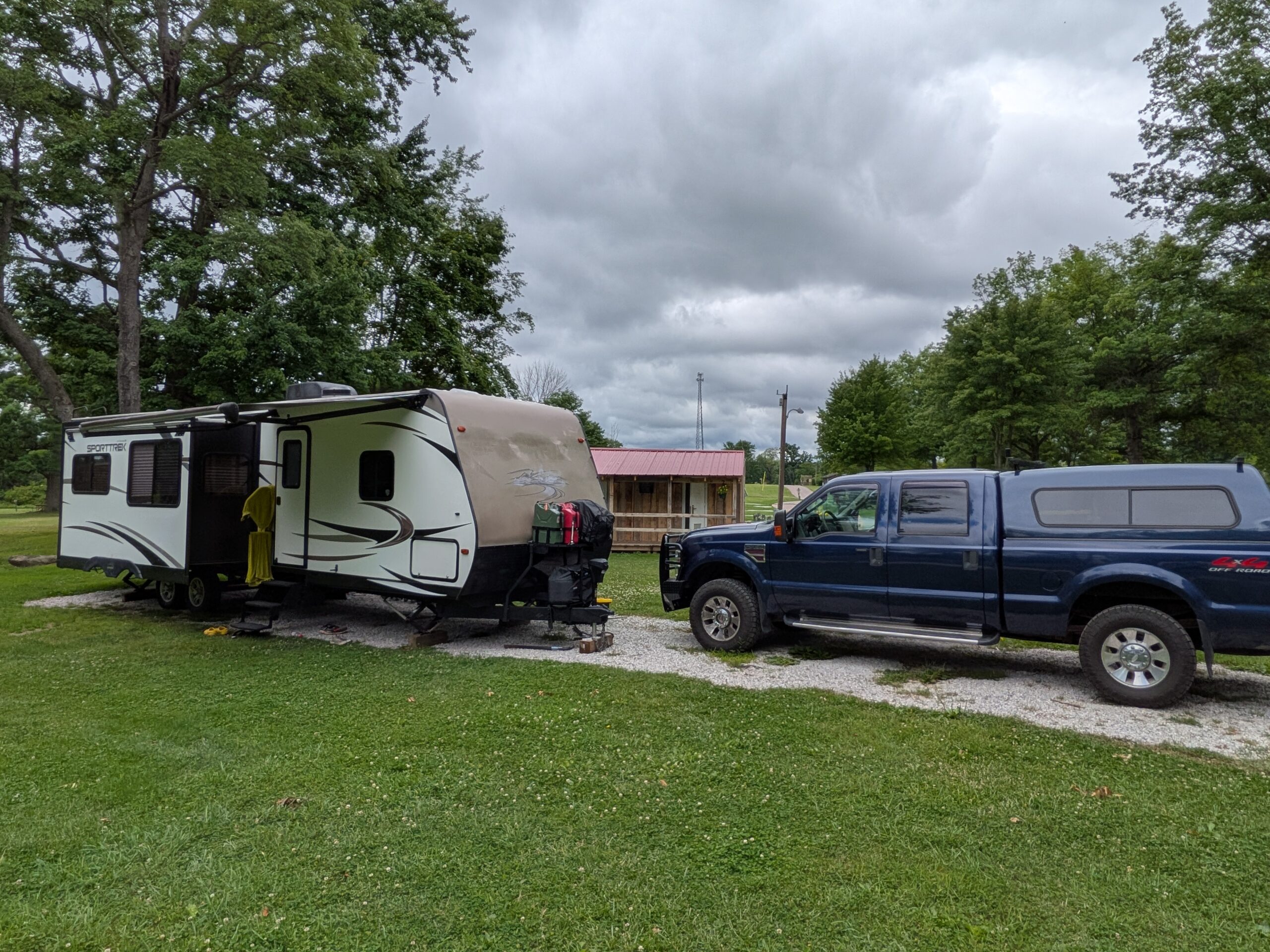
We’re On The Road!
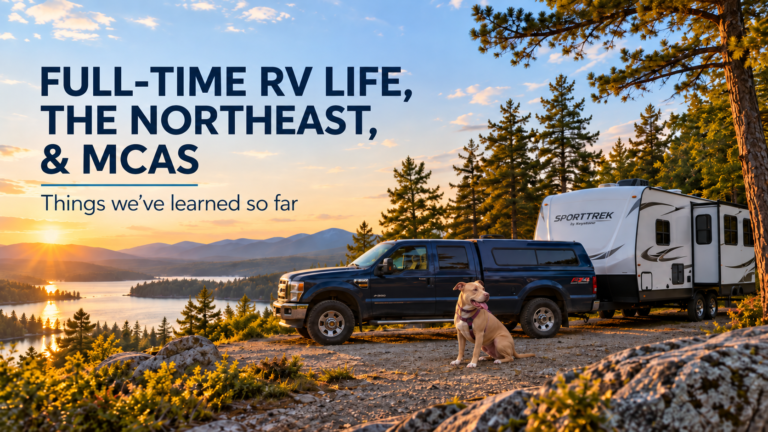
Today we completed the first leg of our 7,500-mile journey around the country in search of a place where I might finally find some relief from my MCAS symptoms.
My wife and two sons have sacrificed a tremendous amount to make this adventure possible. Leaving behind a home, routines, friends, and the comfort of knowing what tomorrow looks like isn’t easy. I’m incredibly grateful for their support and excited to see where this experiment leads us.
Before we left, I spent months modifying our truck and camper to make life on the road as comfortable and functional as possible. Some of these projects were born out of necessity, others simply made daily life easier. Here are a few of my favorites.
The Garage
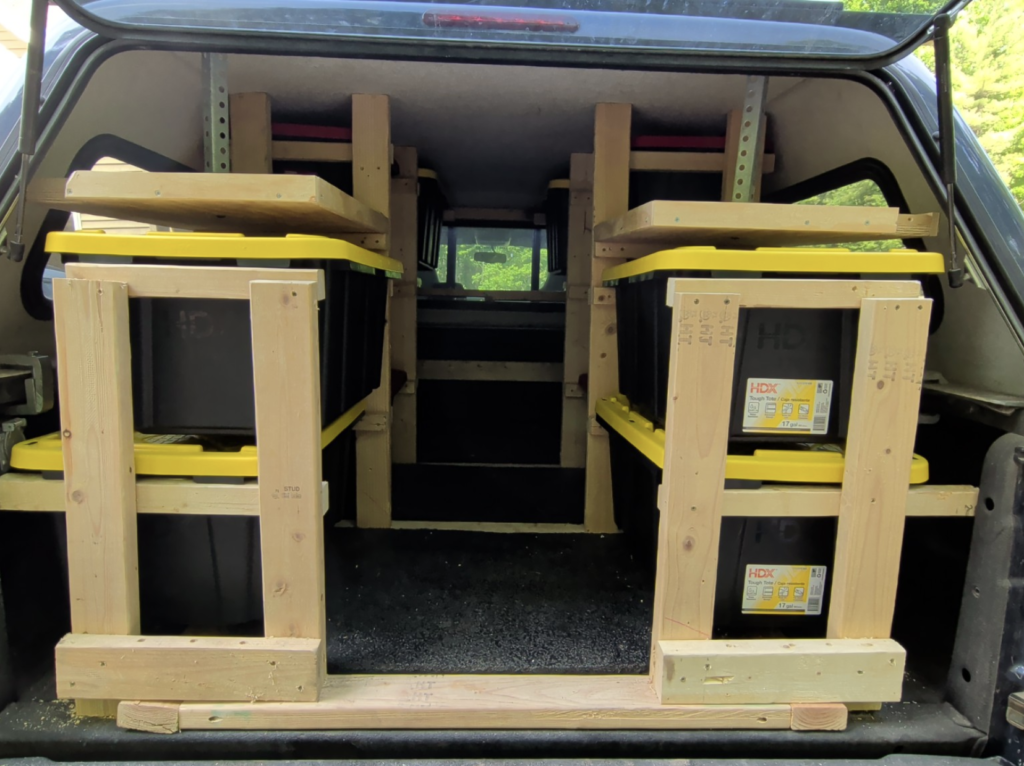
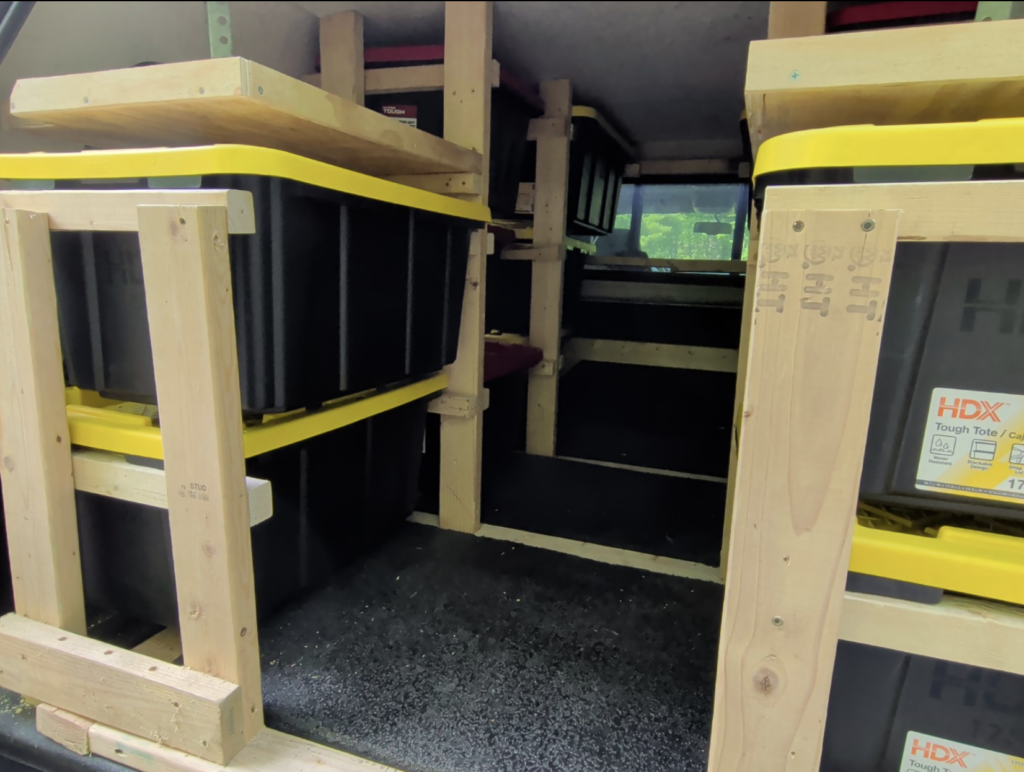
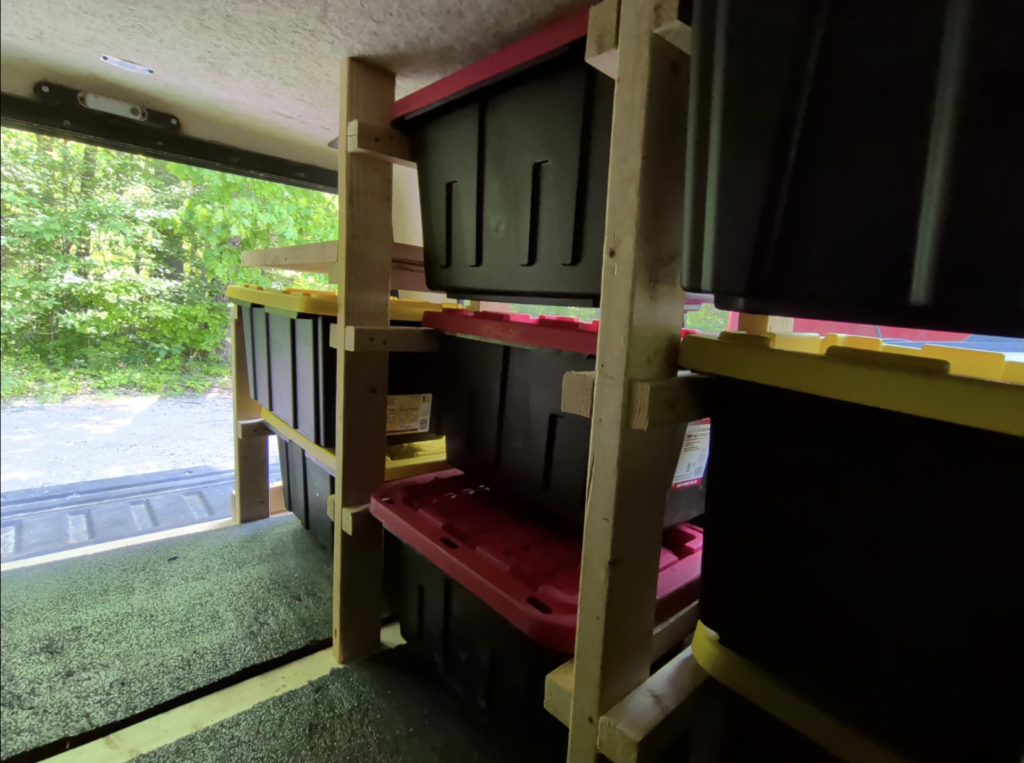
One of the biggest challenges of living in an RV full-time is figuring out where to put everything. Using the mounts from my homemade Unistrut roof rack and the old mounting holes from the truck’s fifth-wheel hitch, I built what our family now affectionately calls “The Garage.”
The system uses sixteen hanging storage totes arranged so that any row can be removed without disturbing the others. It also includes shelving for workout equipment and larger items. This is where we store tools, cold-weather gear, shoes, dog food, outdoor toys, and all of the miscellaneous equipment that tends to accumulate during everyday life.
So far it has been one of the most useful upgrades we’ve made.
The Office
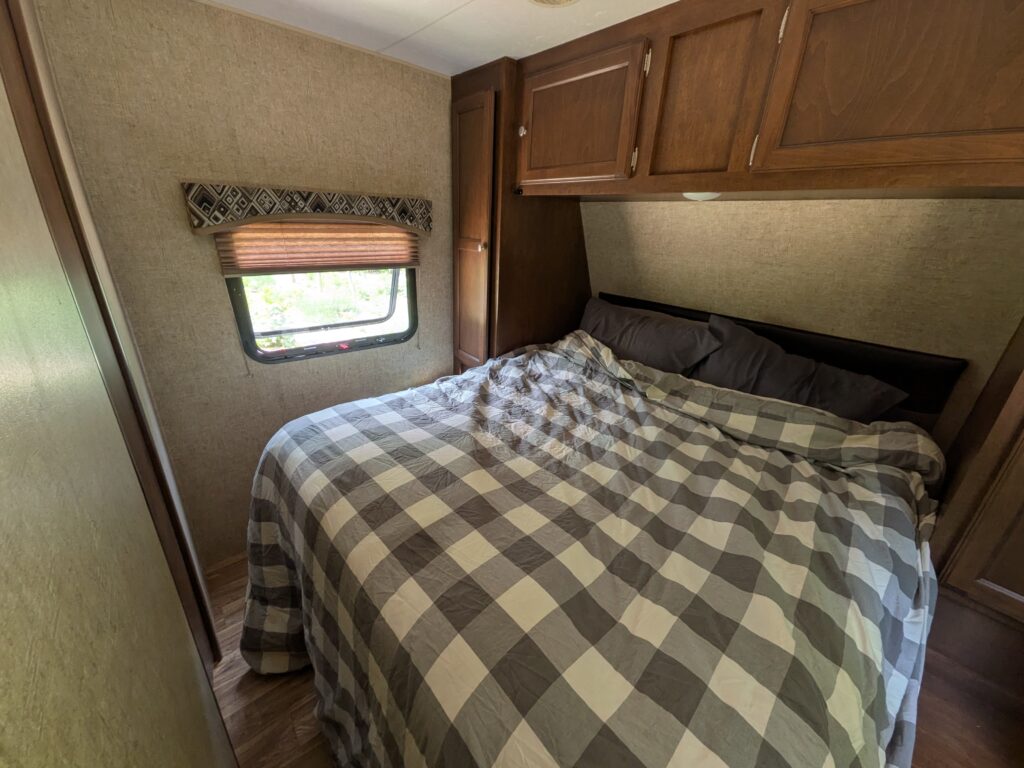
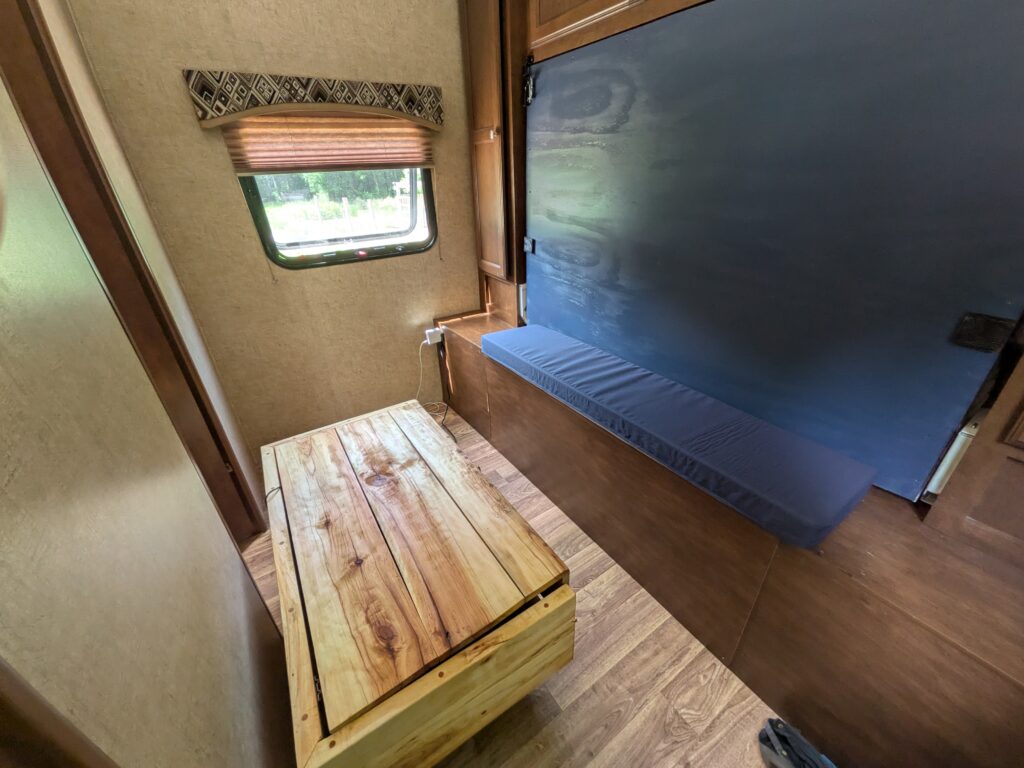
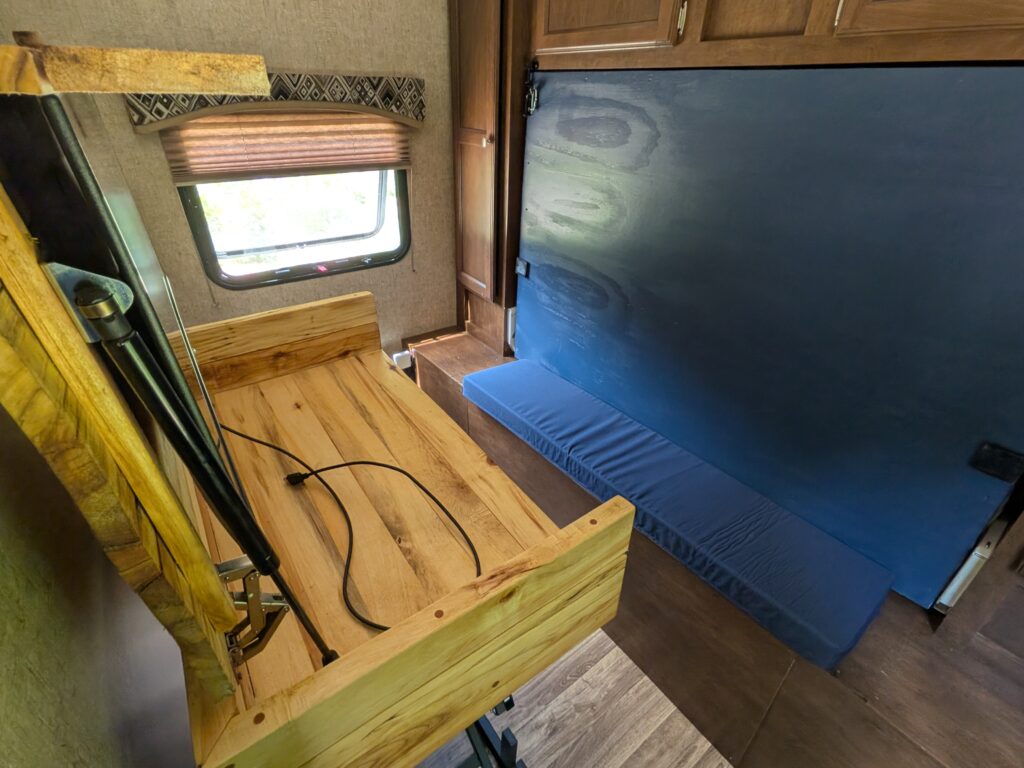
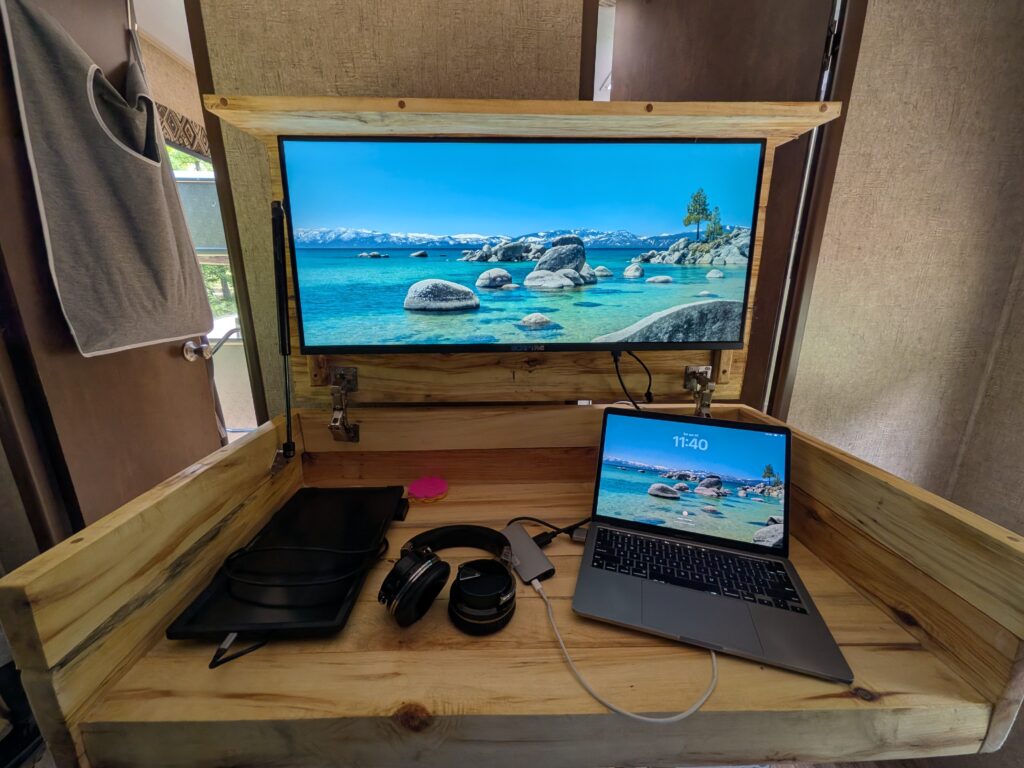
Because my wife works remotely full-time, creating a functional workspace was one of our highest priorities.
I converted our master bed into a Murphy bed and built a custom electric desk that lives underneath it.
The desk uses a double-scissor lift mechanism that allows it to raise and lower electronically to any working height. A monitor is built directly into the lid, and when not in use everything folds neatly away beneath the bed.
When the workday is over, the office disappears and the bedroom returns.
Staying Connected
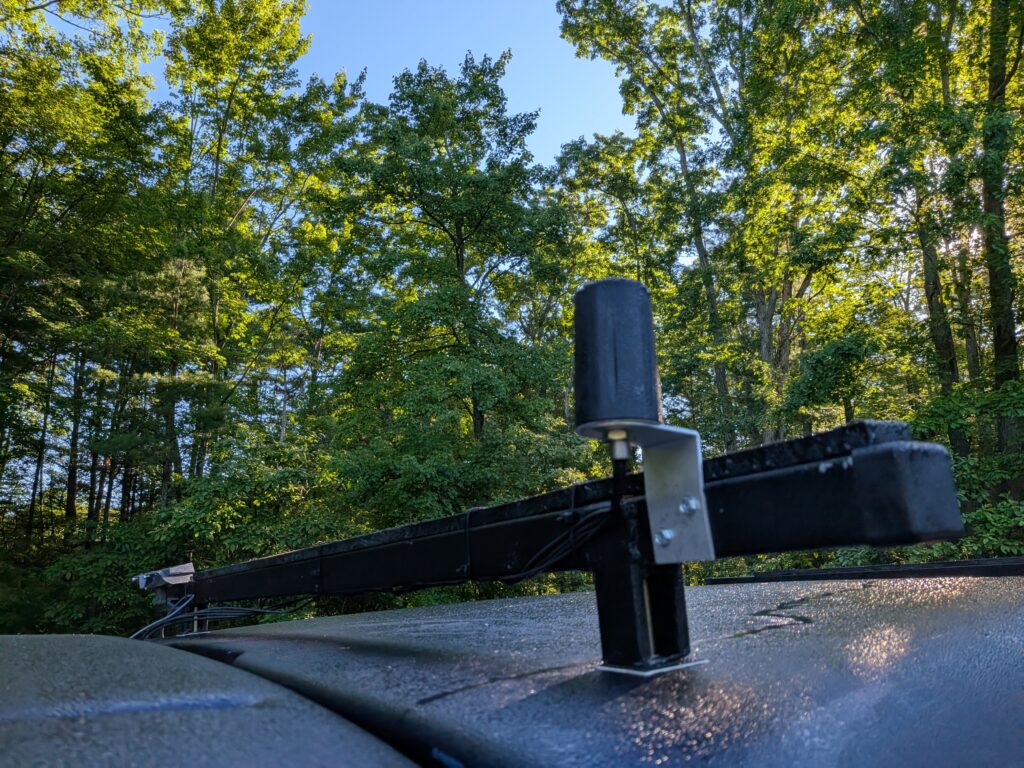
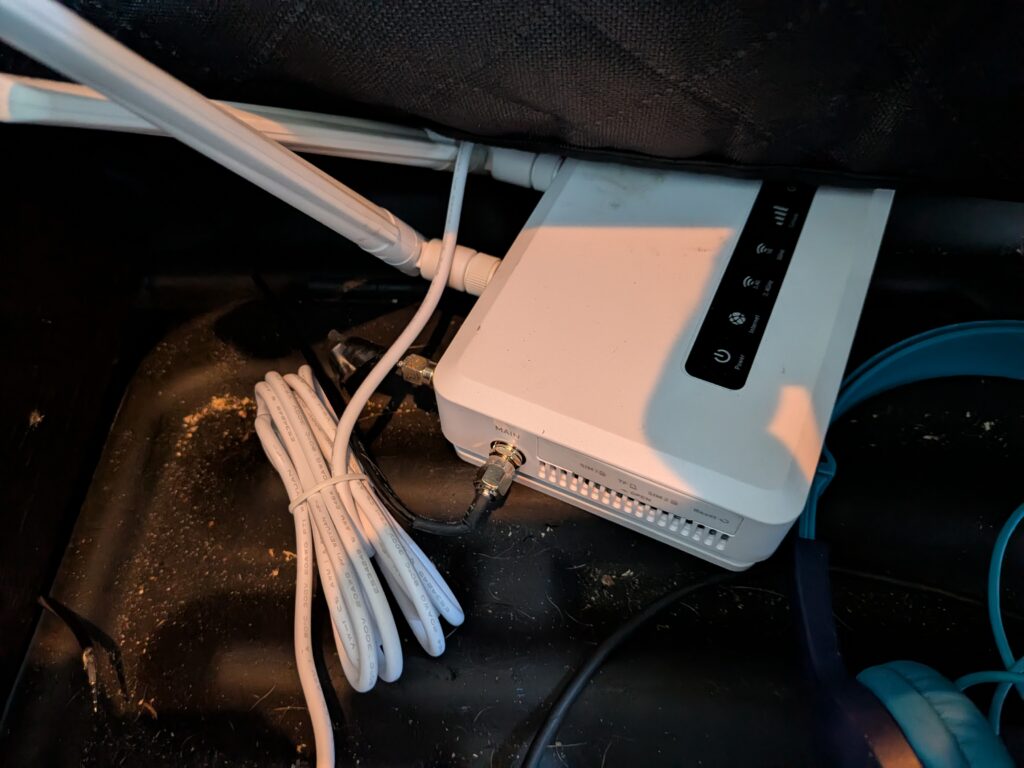
Reliable internet isn’t optional when you’re working remotely from an RV.
To make sure we stay connected, both the truck and camper have mounting locations for our Starlink Mini and our cellular internet system.
The cellular setup consists of an external 4×4 MIMO antenna paired with an unlimited-data 5G router. Both systems can be moved between the truck and camper depending on whether we’re traveling or parked.
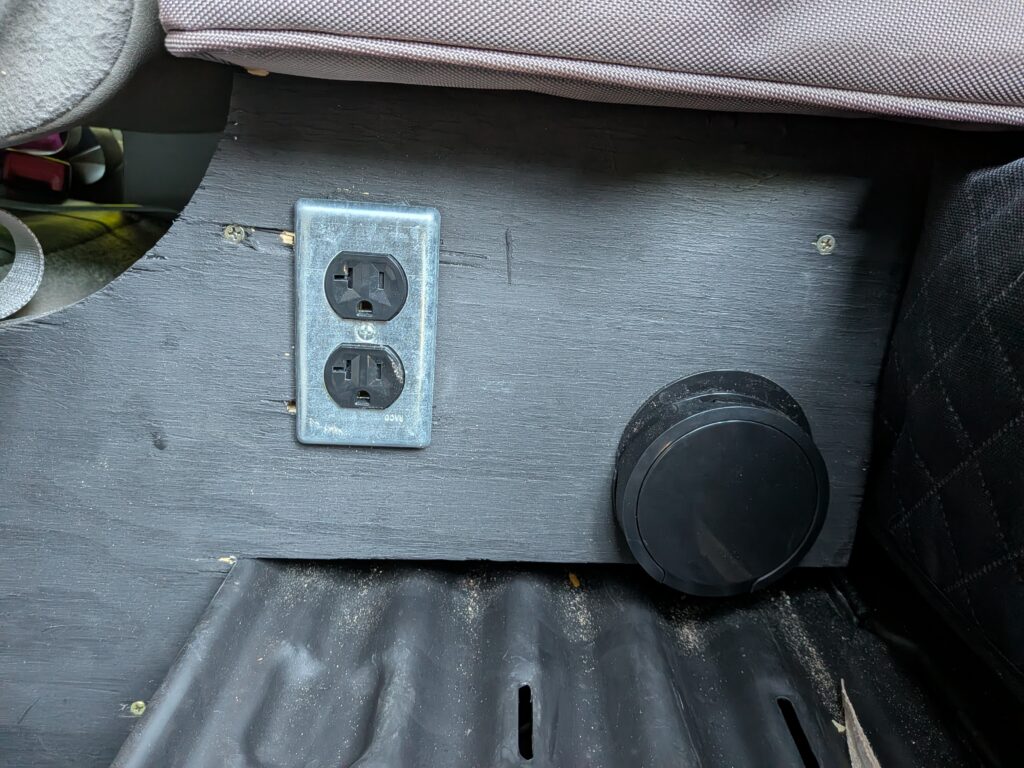
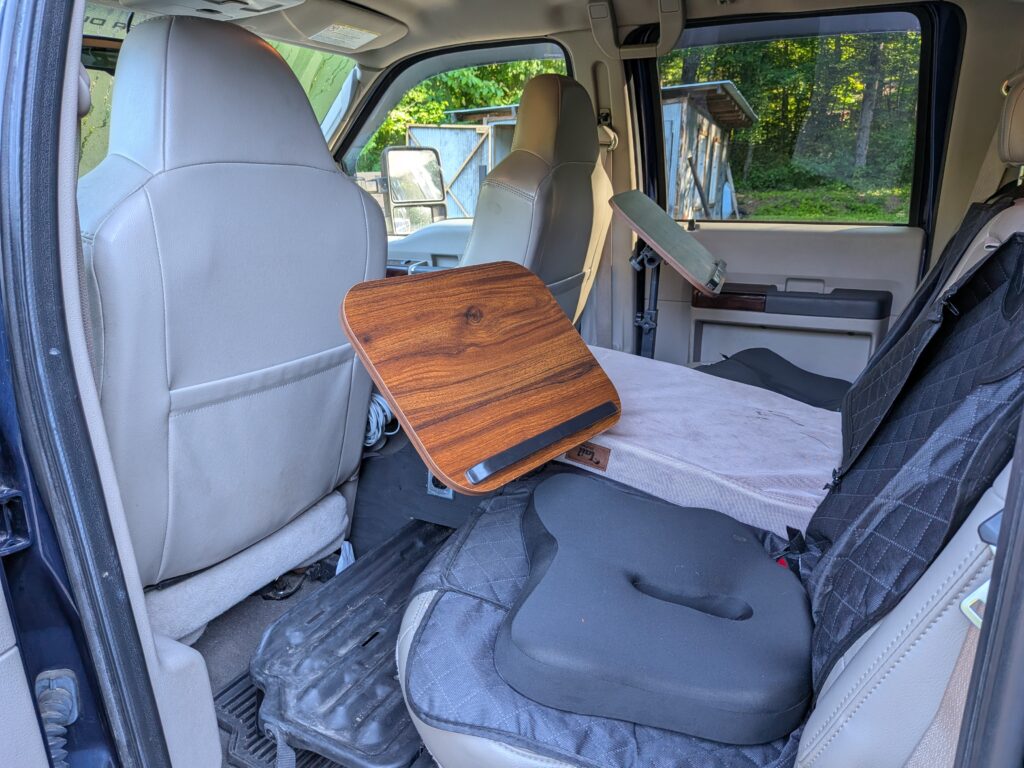
I also installed a sign wave inverter in the rear of the cab so the boys can run their laptops and put a couple of swinging desks in for them as well. In-between them I built a little cabinet that serves a base for a dog bed for our family dog Remi.
The goal is simple: stay connected no matter where the road takes us.
Dual Backup Cameras
Towing a 32-foot camper creates a lot of blind spots.
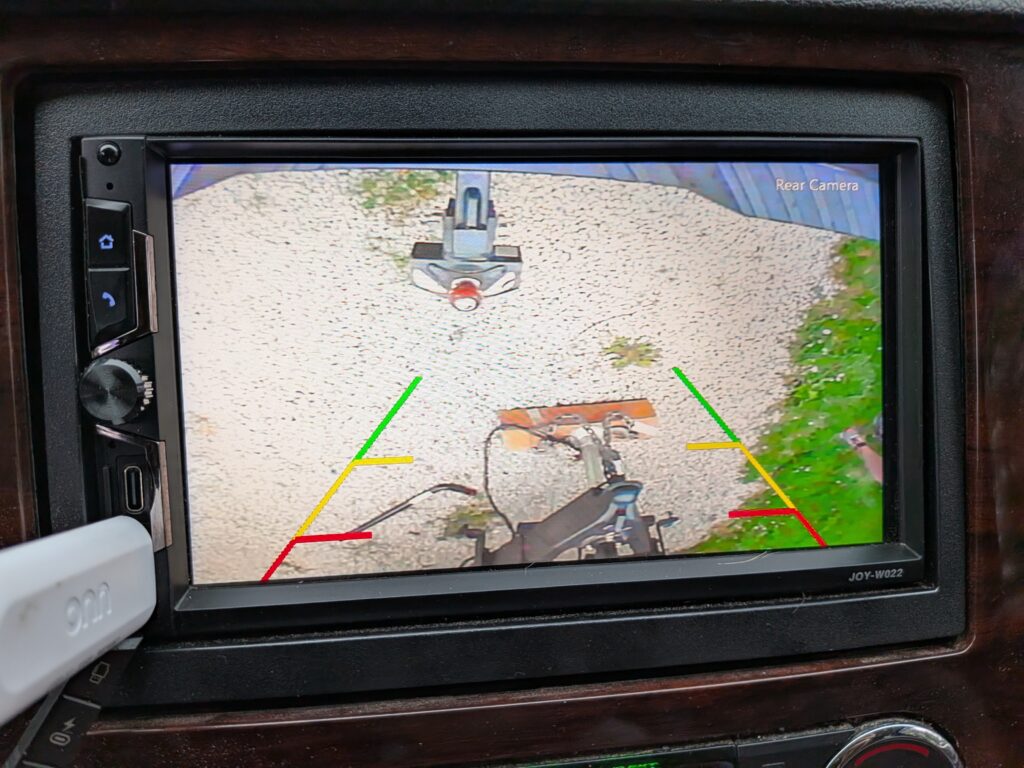
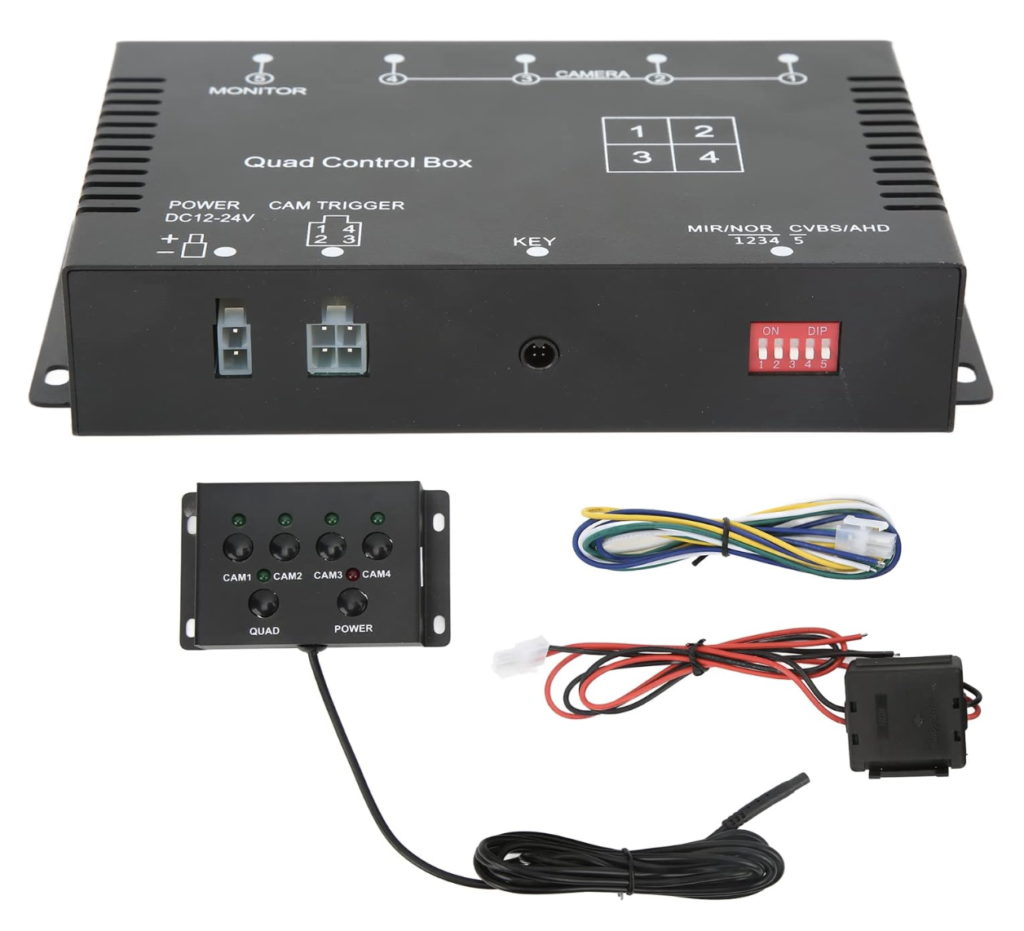
To help with that, I installed a new touchscreen radio and wired two cameras into a custom switching system.
One camera is mounted on the rear of the truck and the other on the back of the camper. I also split the signal from the camper camera and connected it to the radio’s front camera input, allowing me to use it as a rear-view camera while driving.
It’s one of those upgrades that immediately makes towing feel more comfortable.
Storage For The Boys
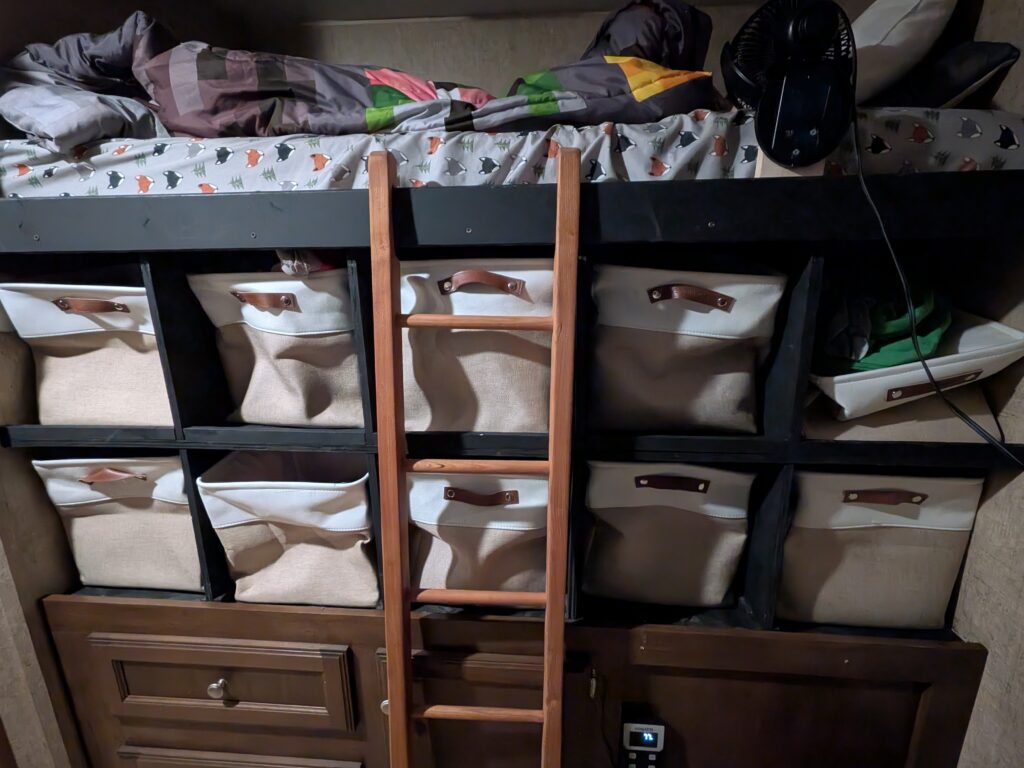
The boys needed a place for clothes, toys, books, and the treasures that inevitably get collected along the way.
To make room, I removed one of the rear bunk beds and replaced it with a sixteen-bin storage system.
I also built custom J-hook ladders that can easily slide into place or be removed entirely, making it much easier for the kids to access their storage.
It’s a small change, but it has made the rear bunk area much more functional.
Unlimited Hot Water and Better Cooking
RV appliances are often functional, but rarely impressive.
One of our first upgrades was replacing the original six-gallon water heater with an on-demand unit that provides essentially unlimited hot water as long as propane is available.
No more racing to finish a shower before the hot water runs out.
I also replaced the microwave with a combination microwave, convection oven, and air fryer. Surprisingly, it has become one of our primary cooking appliances and has worked far better than I expected.
What’s Next
As I write this, we’ve only completed the first leg of the journey. Some of these ideas may turn out to be brilliant, and some may turn out to be terrible. Either way, I’ll keep sharing what works, what doesn’t, and what I would do differently.
These are only a handful of the modifications we’ve made over the last year. There are plenty more projects hiding throughout the truck and camper, and if these upgrades prove themselves over the coming months, I’ll put together a Part 2 showing what worked, what didn’t, and what I would do differently.
If you’re curious where all this preparation is taking us, you can follow Our Search for Home.
If you’re interested in the data we’re collecting along the way, visit Symptom Tracking to see how each stop affects my symptoms.





One Comment