FIELD NOTES #8 – Part One
SOUTHWEST HARBOR,
MAINE

Beautiful places aren’t always healing.
Dates
Aug 4 – Aug 11, 2026
Miles to camp
355
(1,632mi travelled so far)
Weather
60-75
Sunny w/ Storms
Symptom Score
22
(baseline: 23)
WOuld we return
Yes
How I Felt
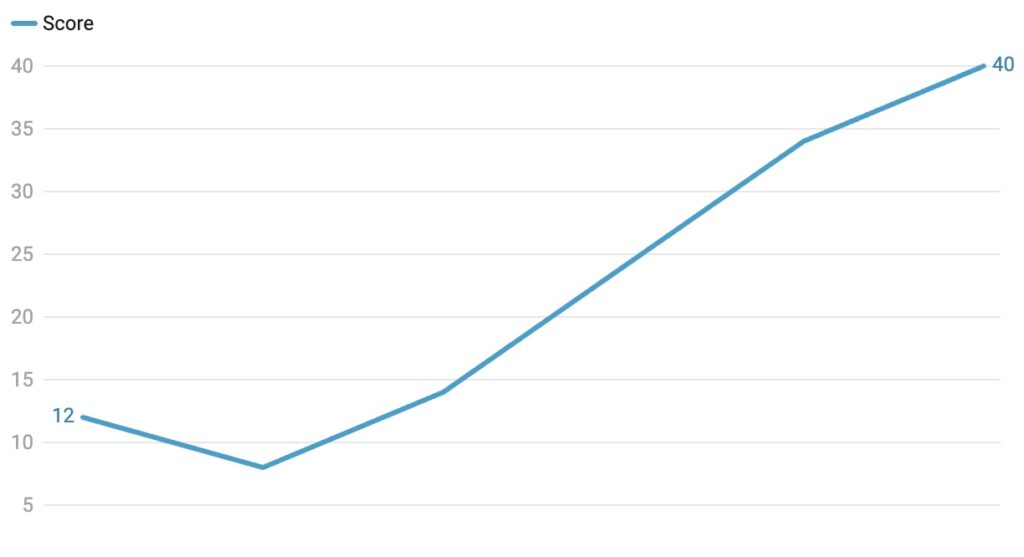
During our stay my average score was 22, but my high was 40, and my low was 8, both were new records.
What We Did
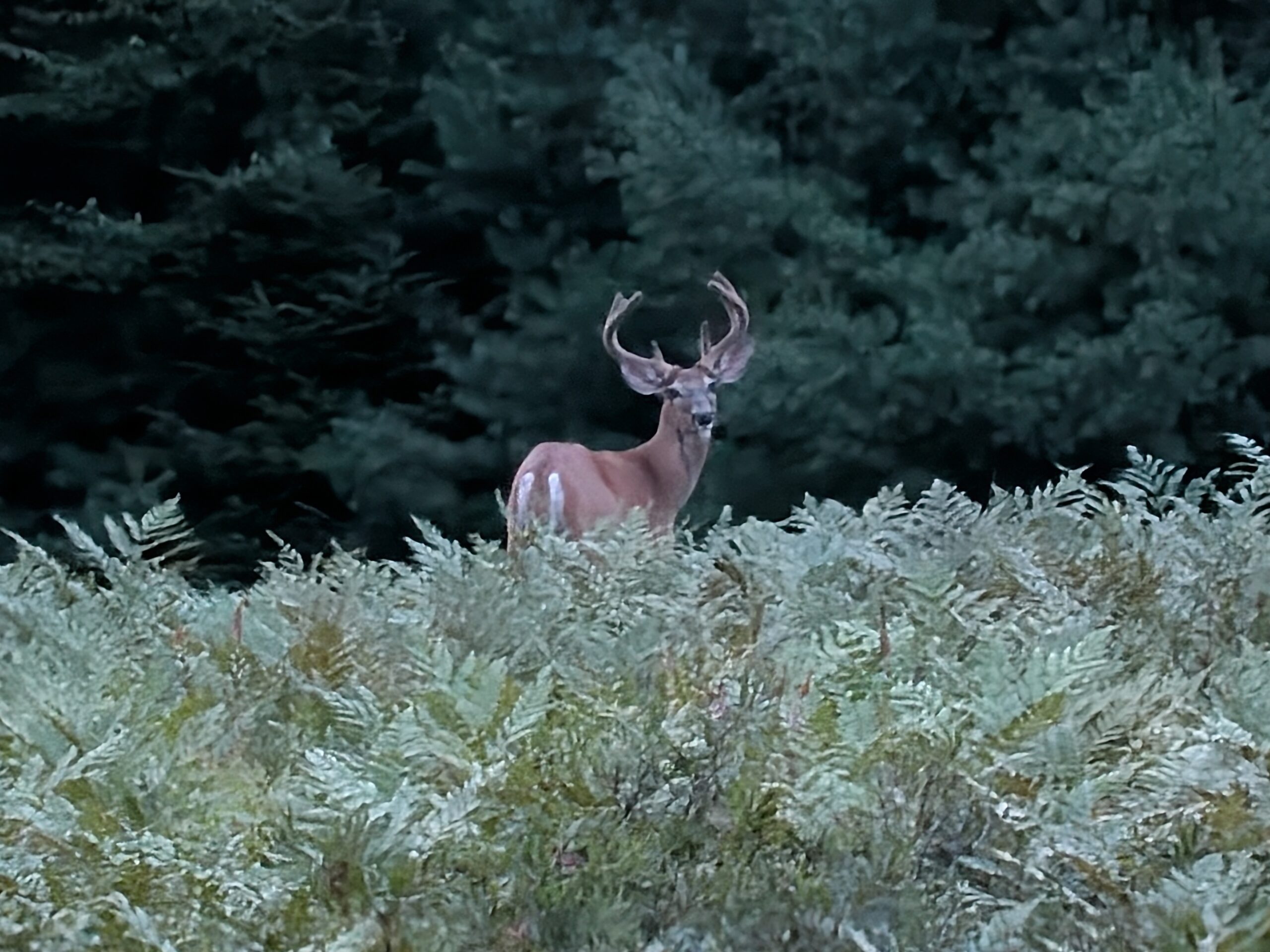
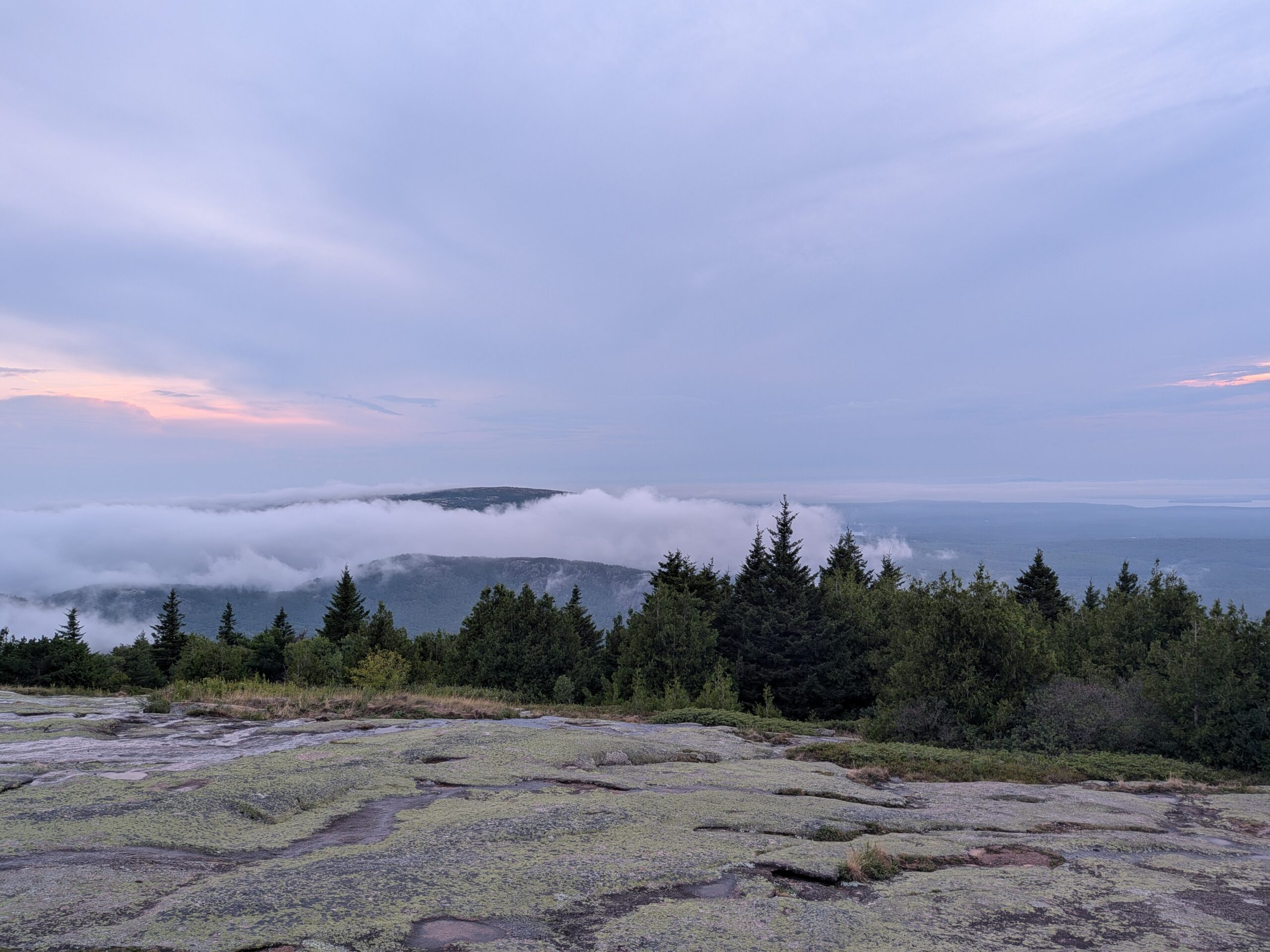
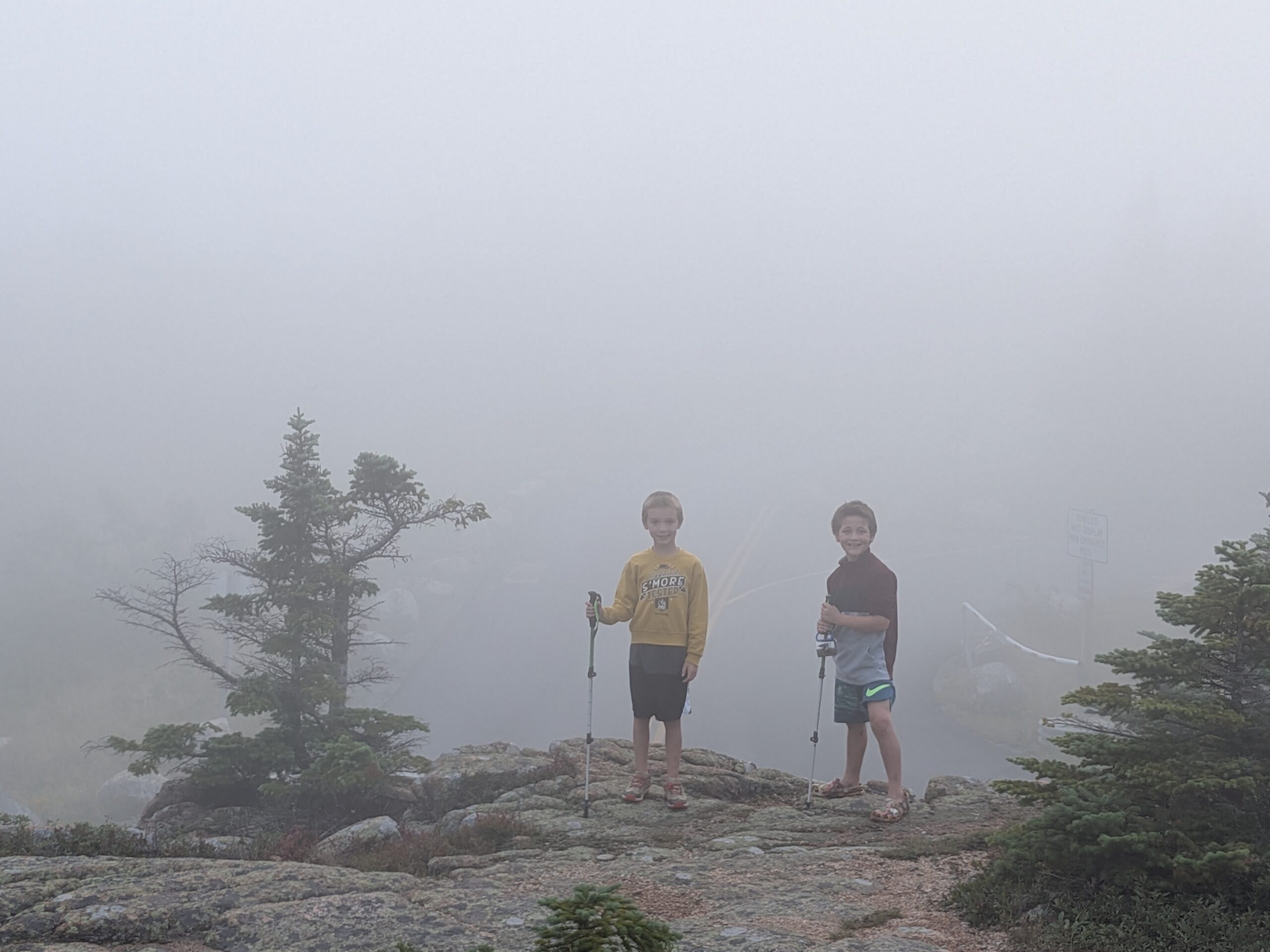
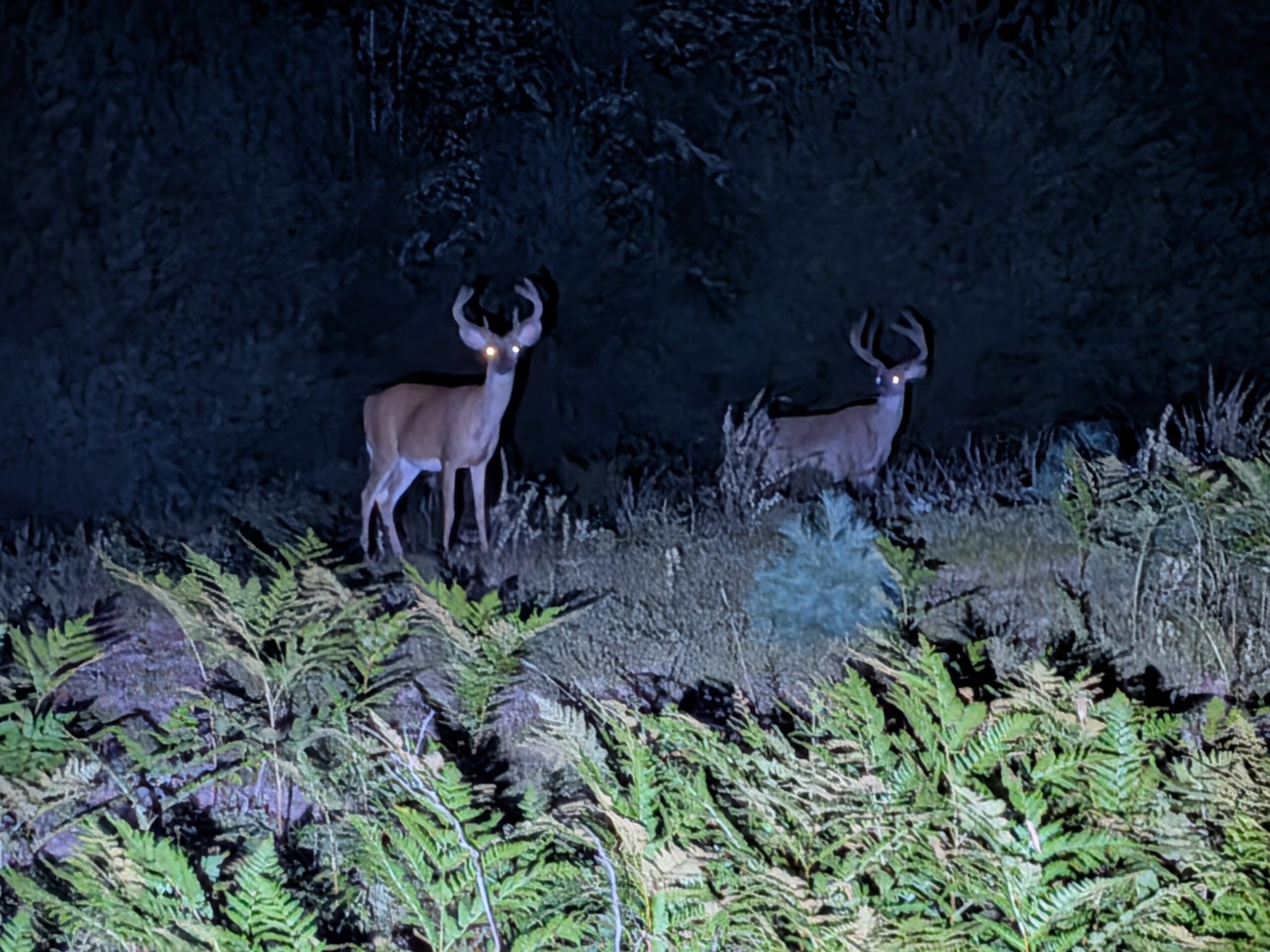
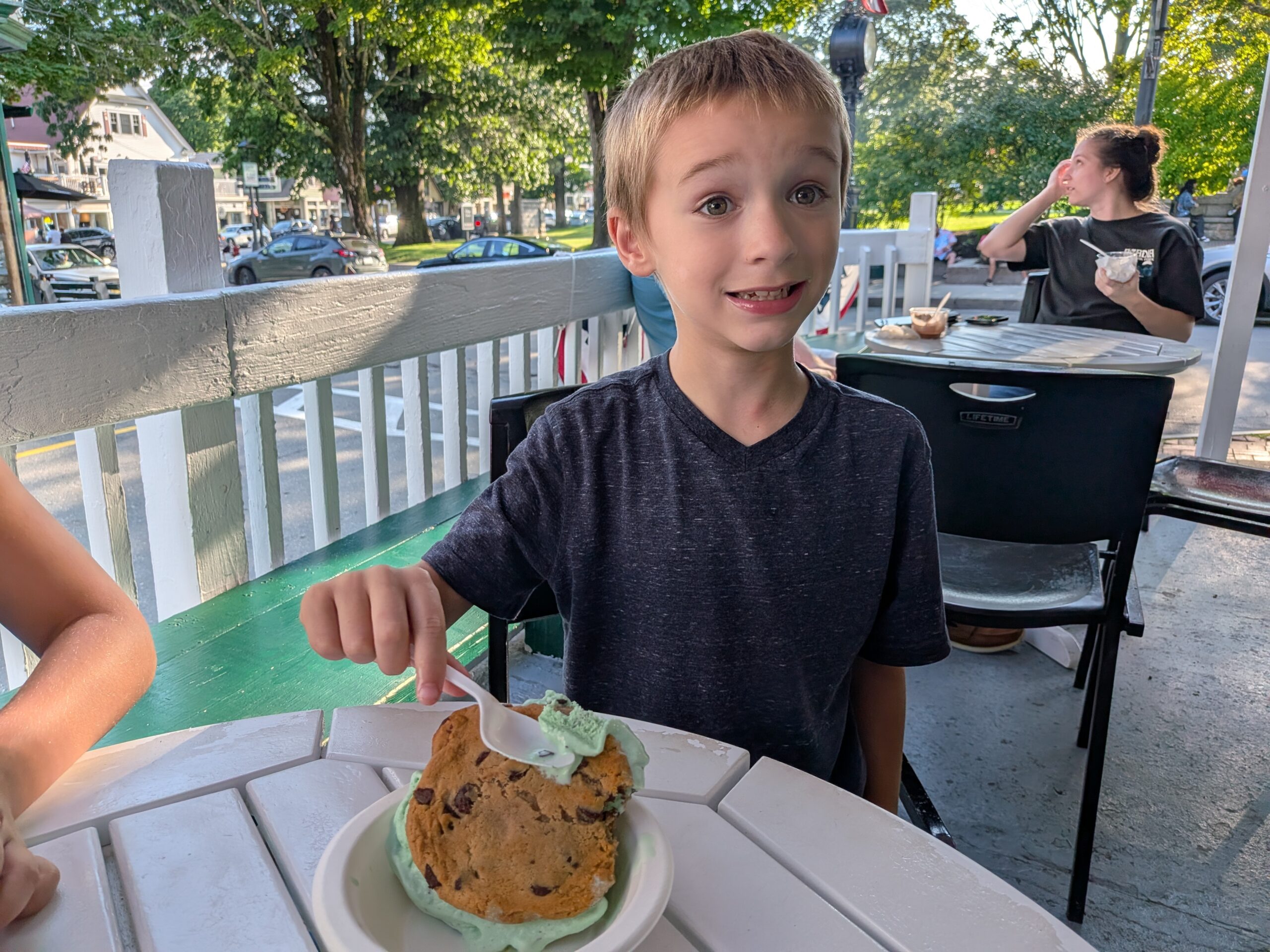
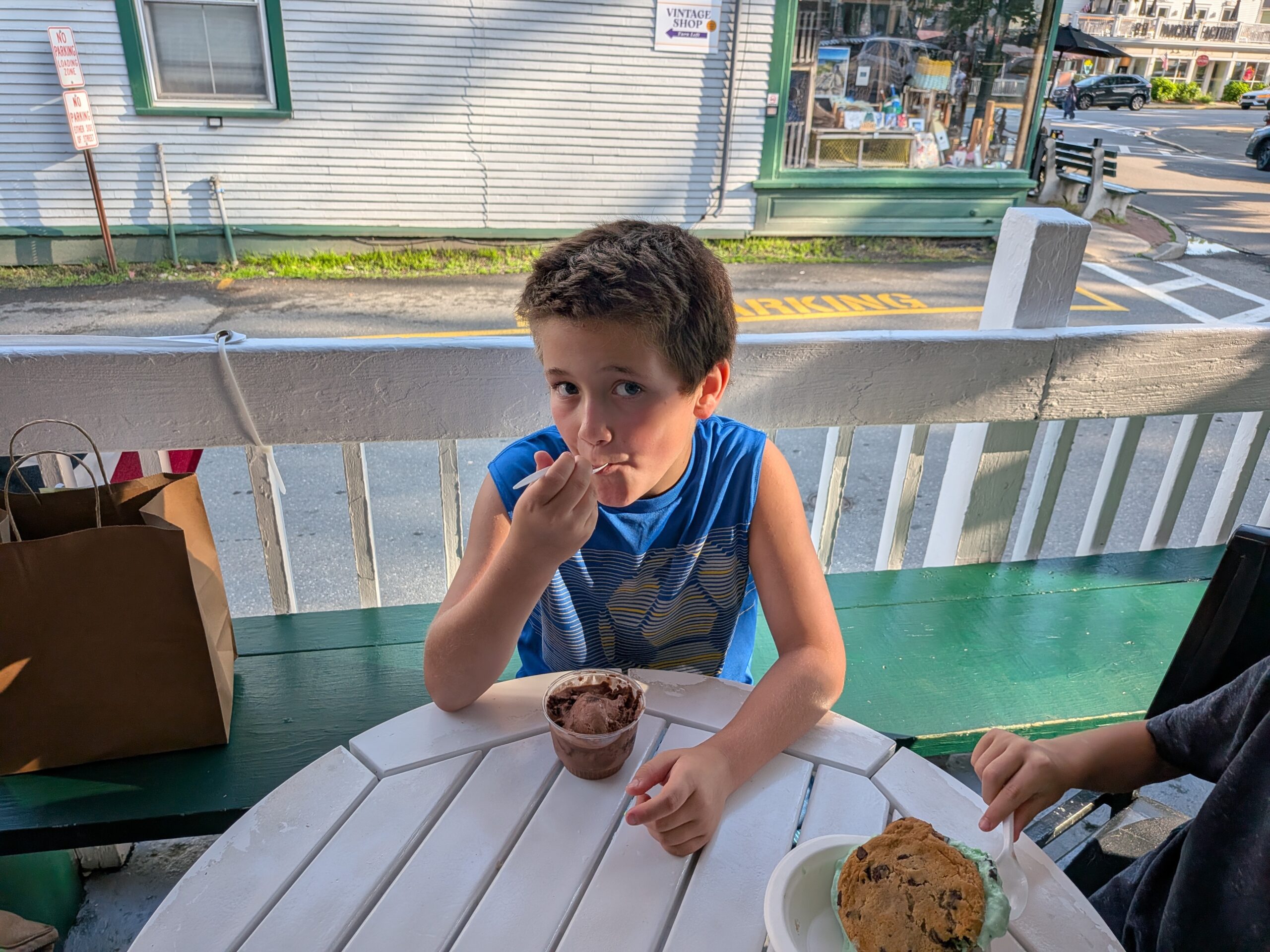
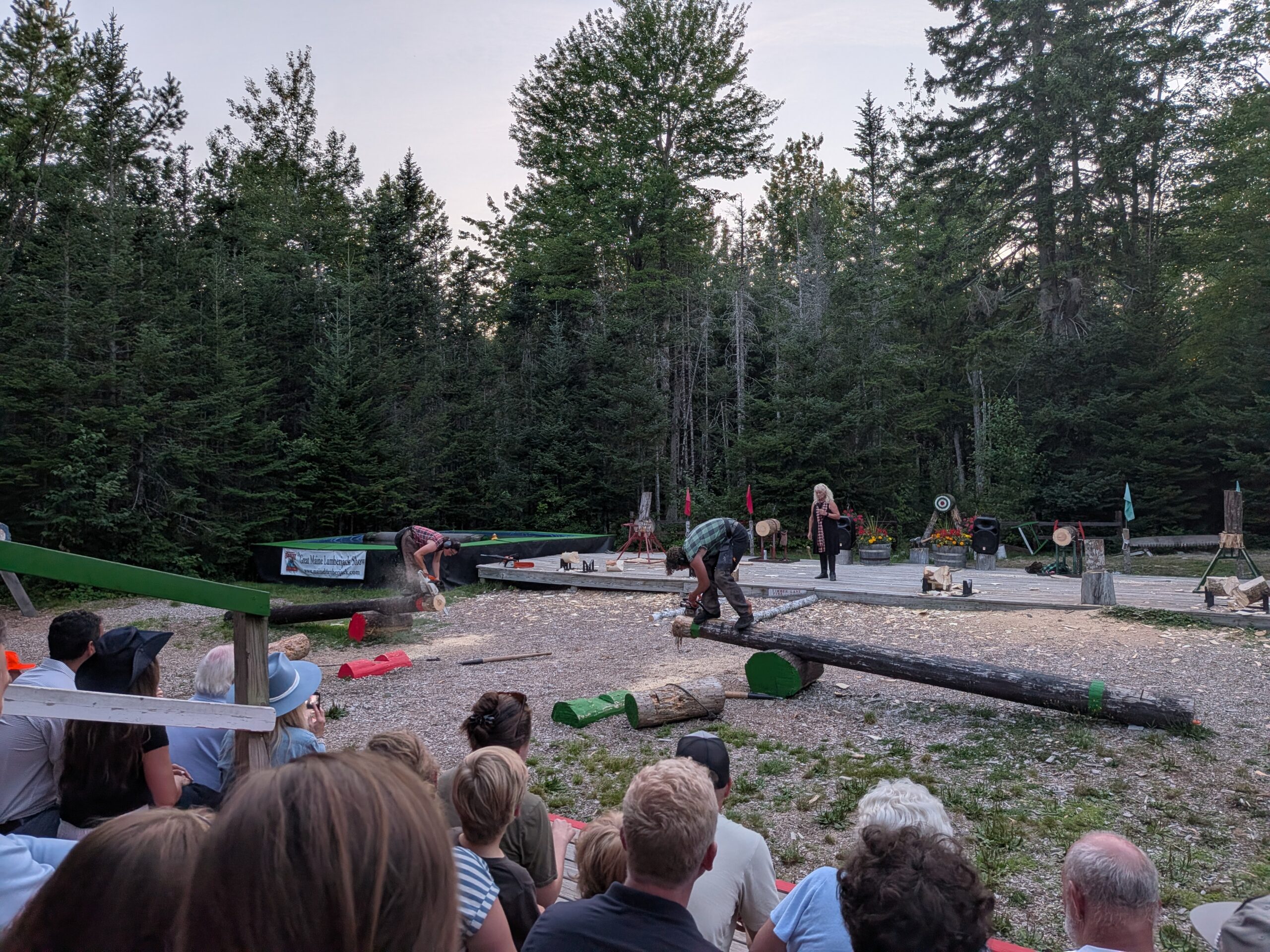
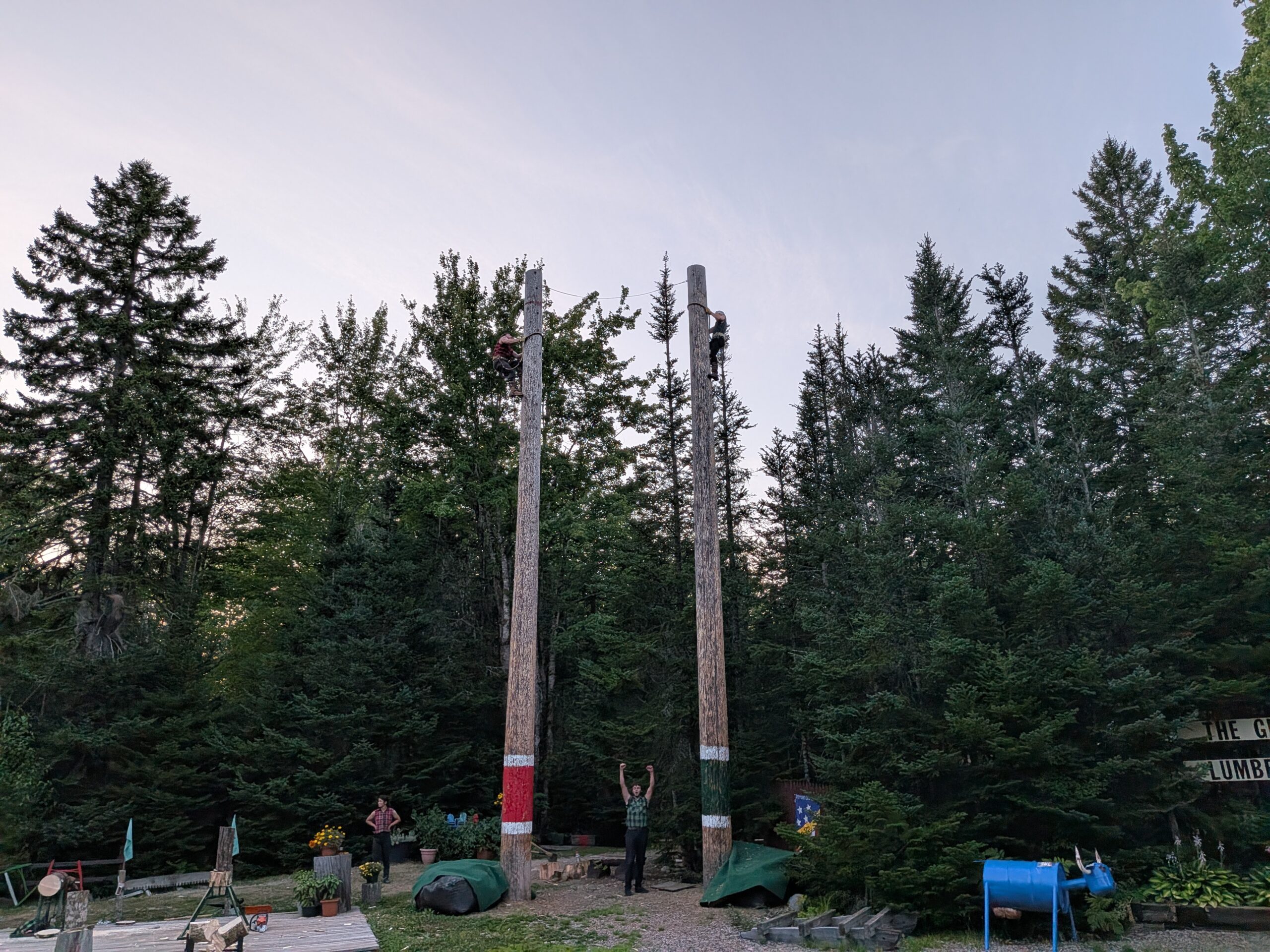
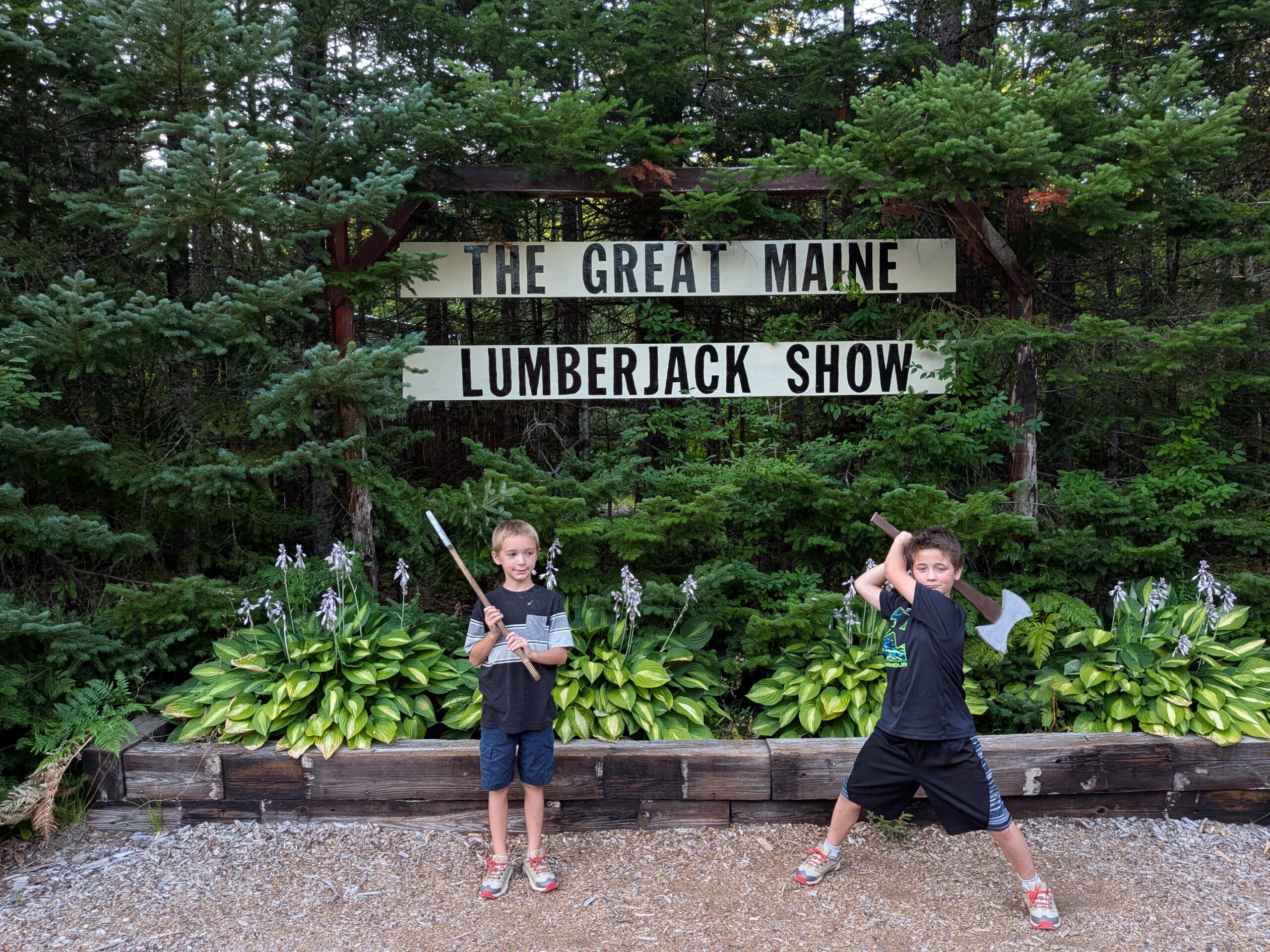
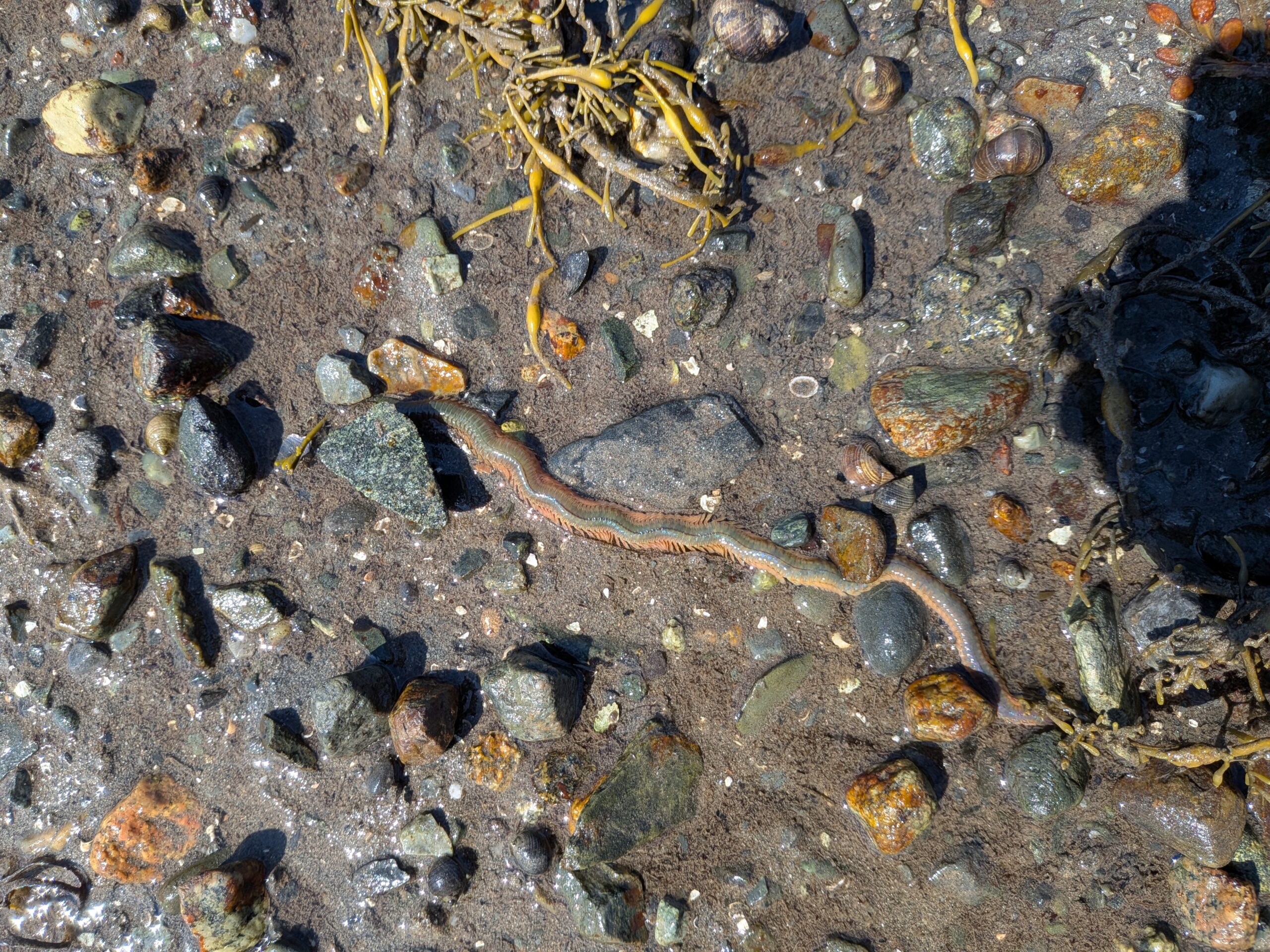
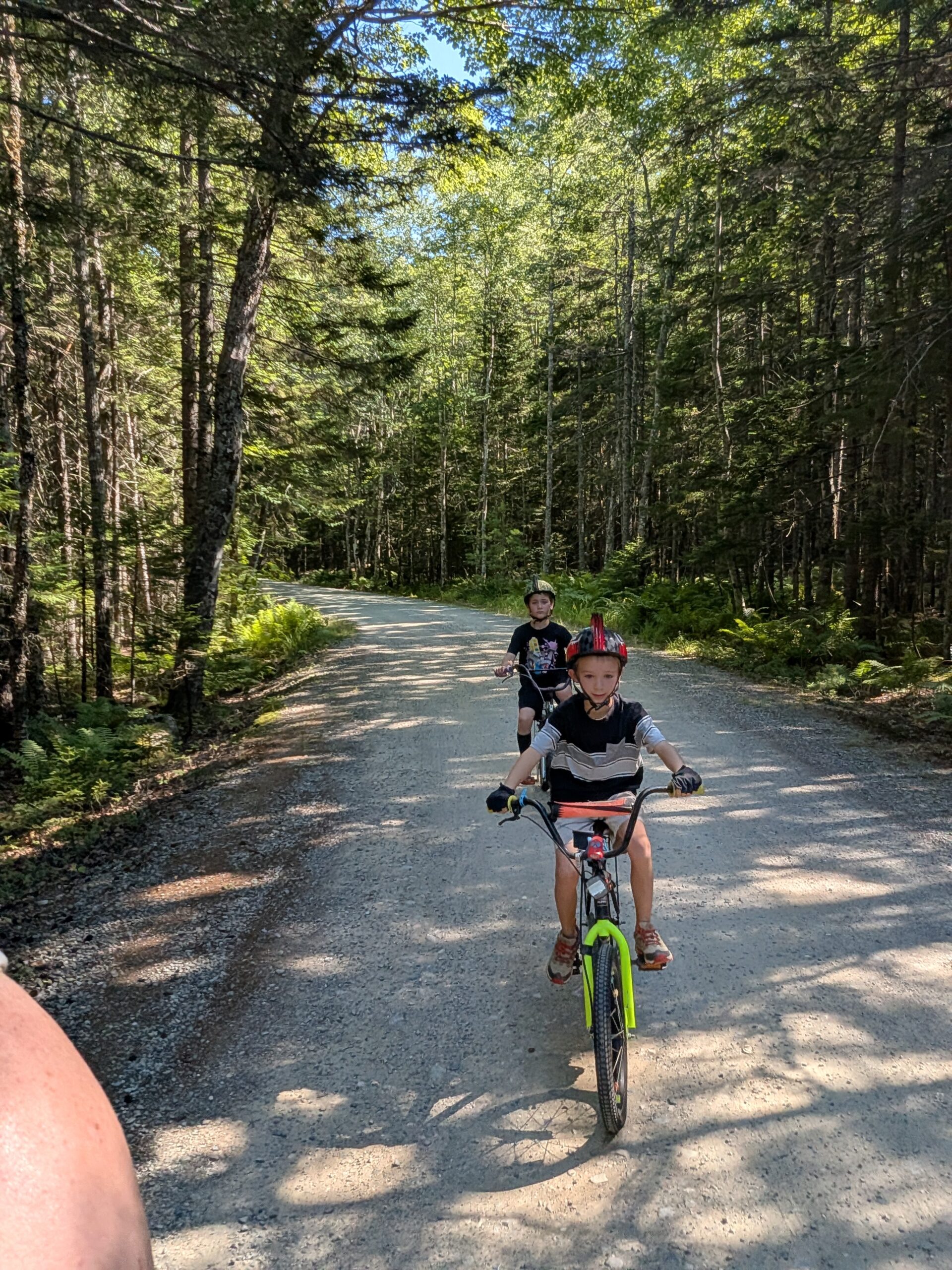
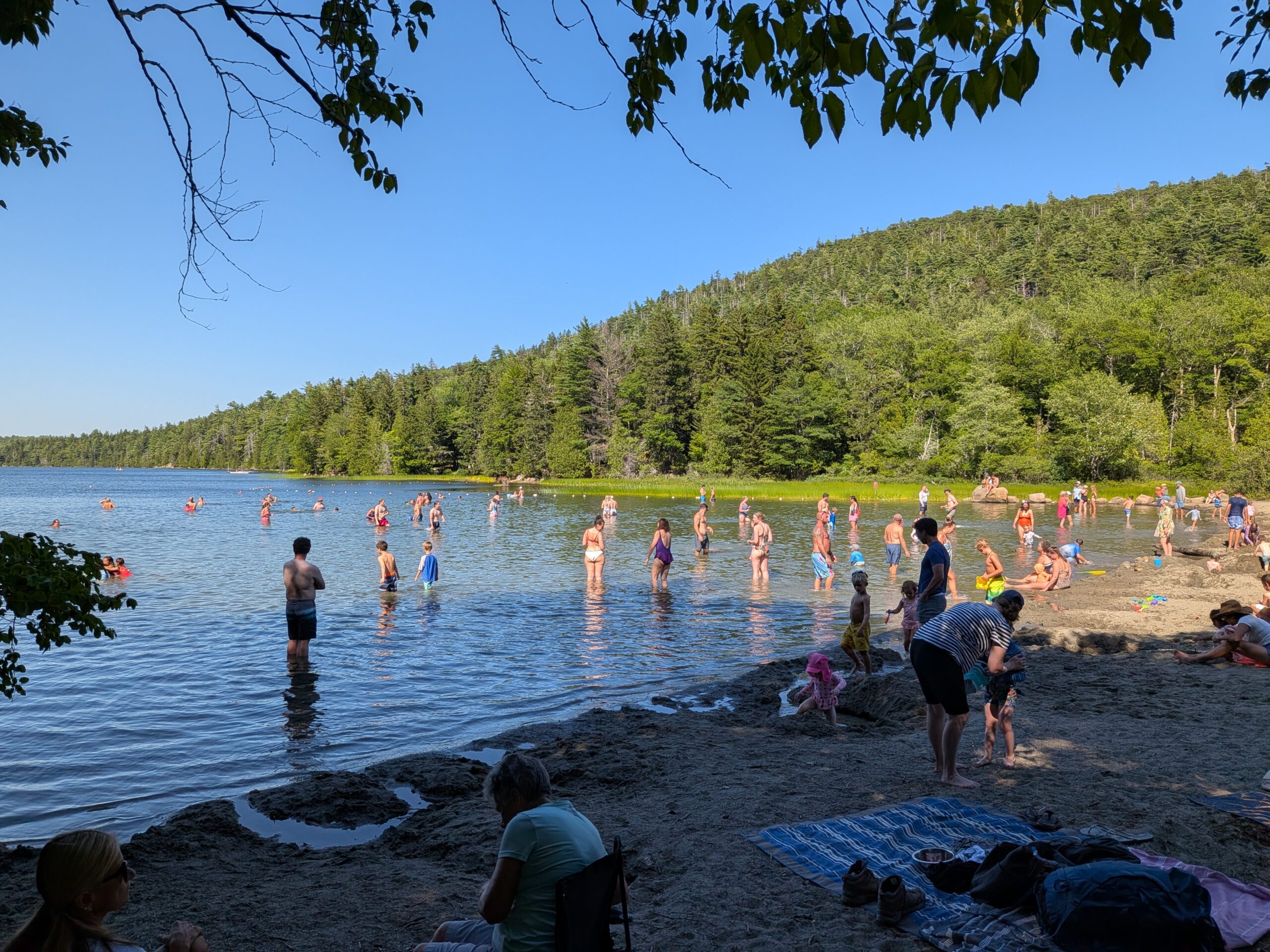
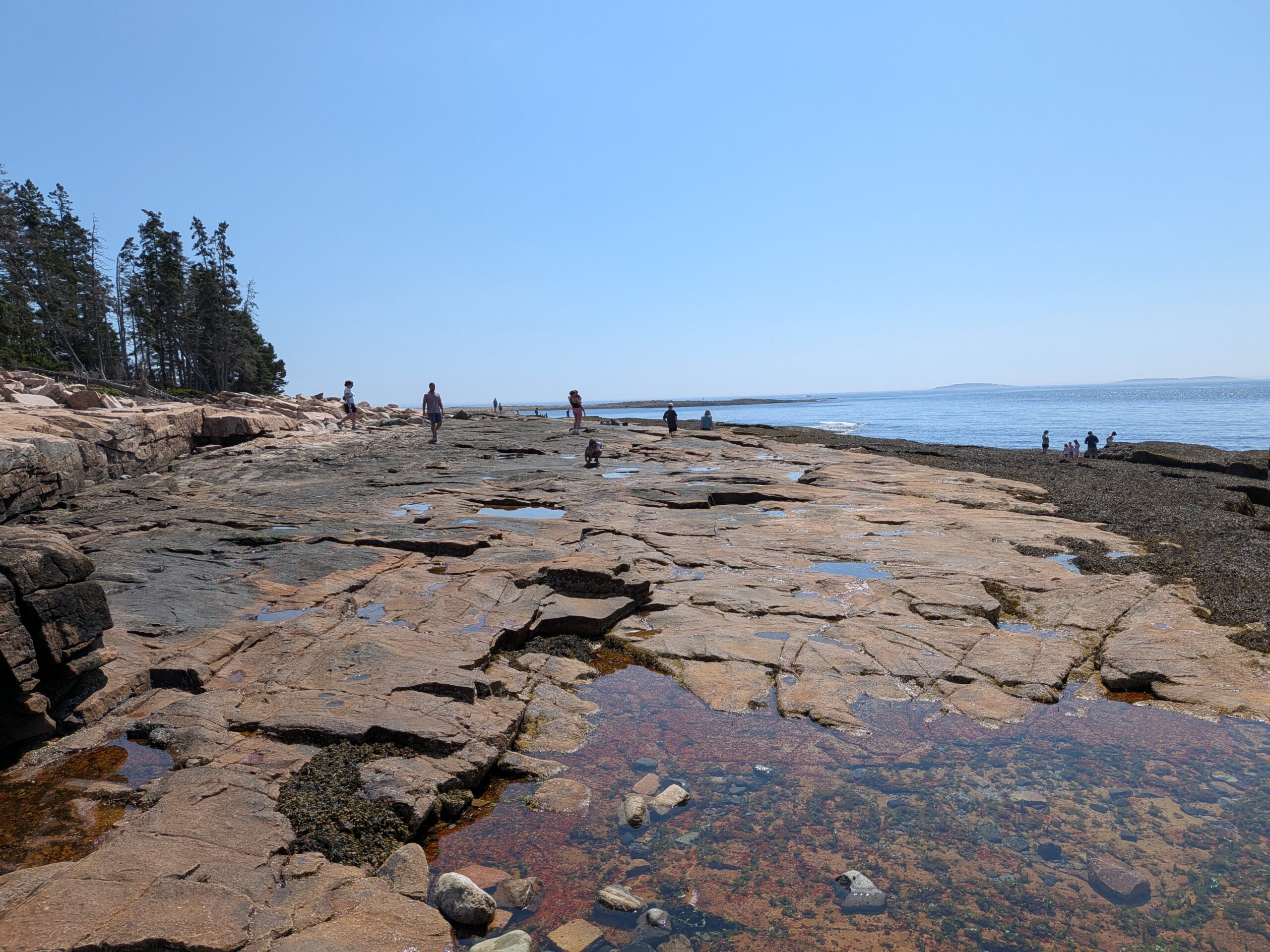
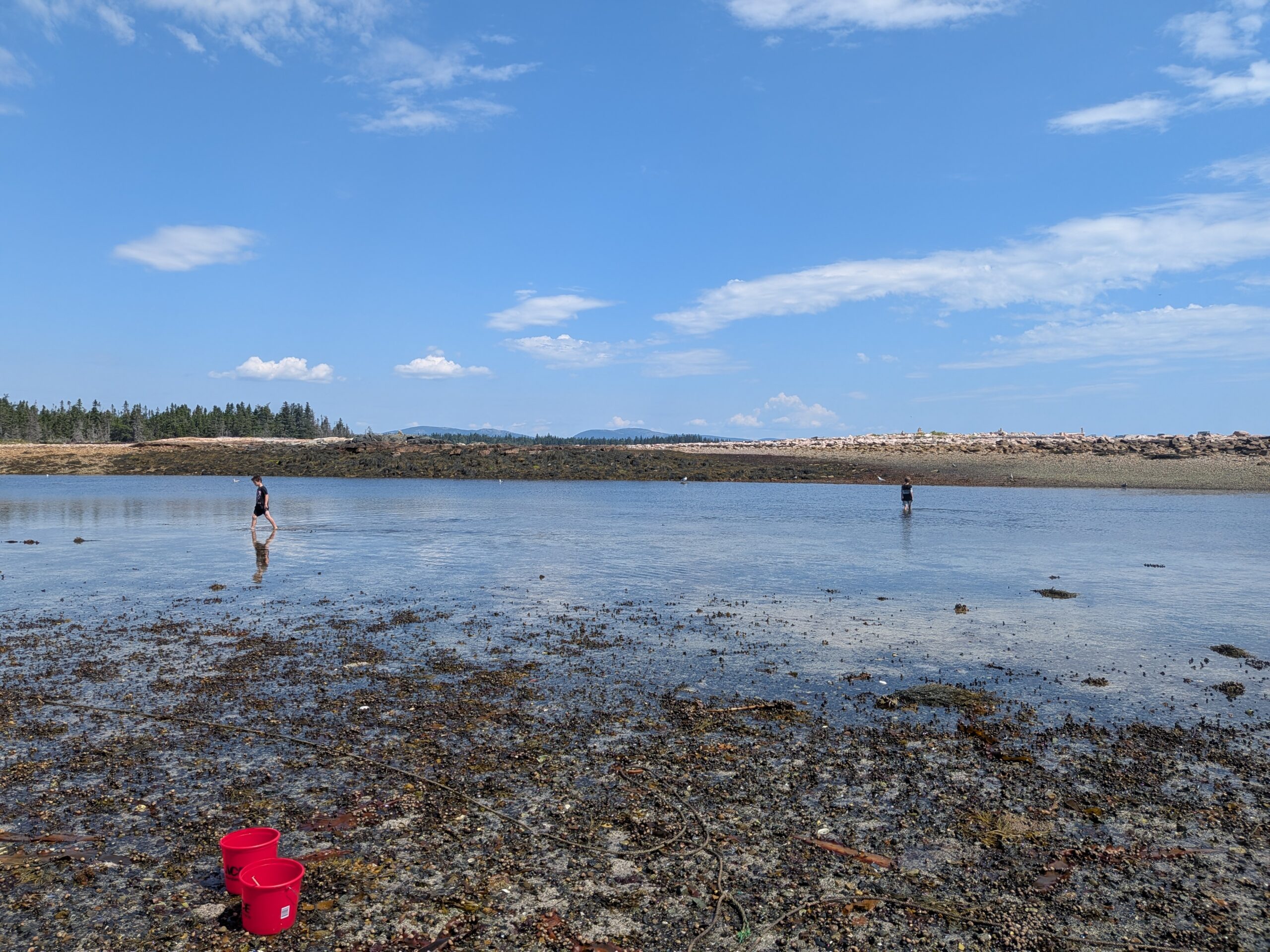
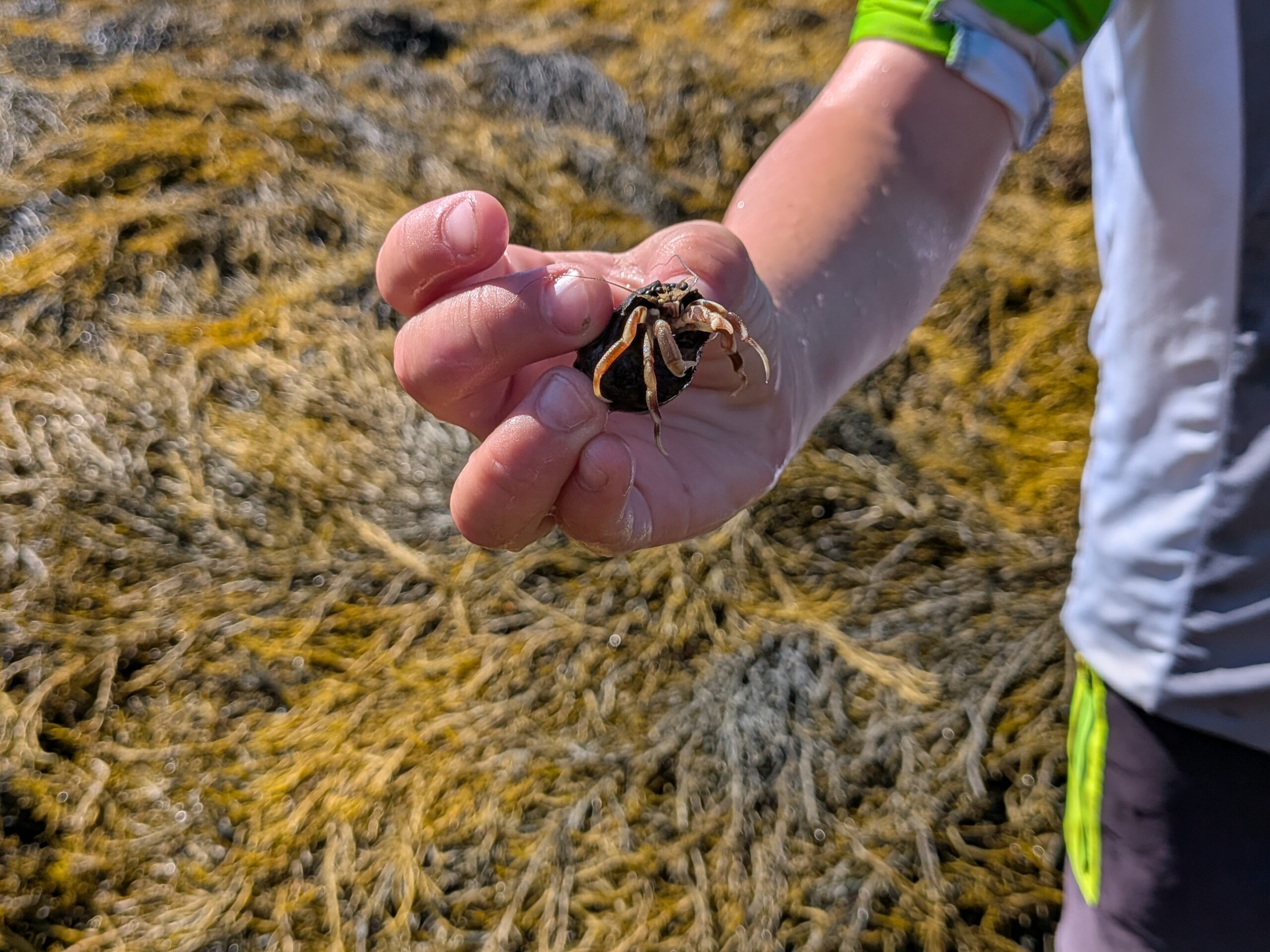
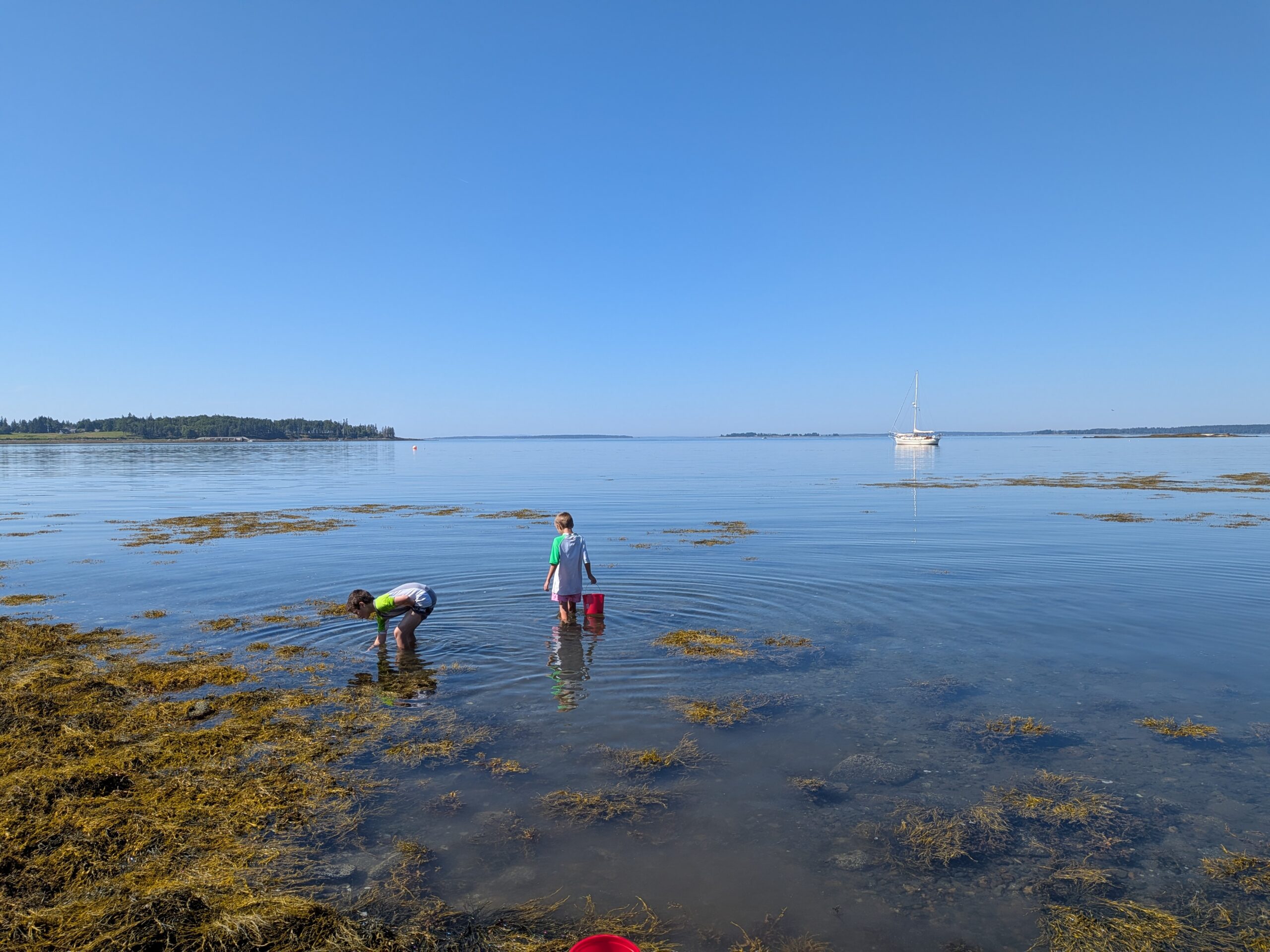
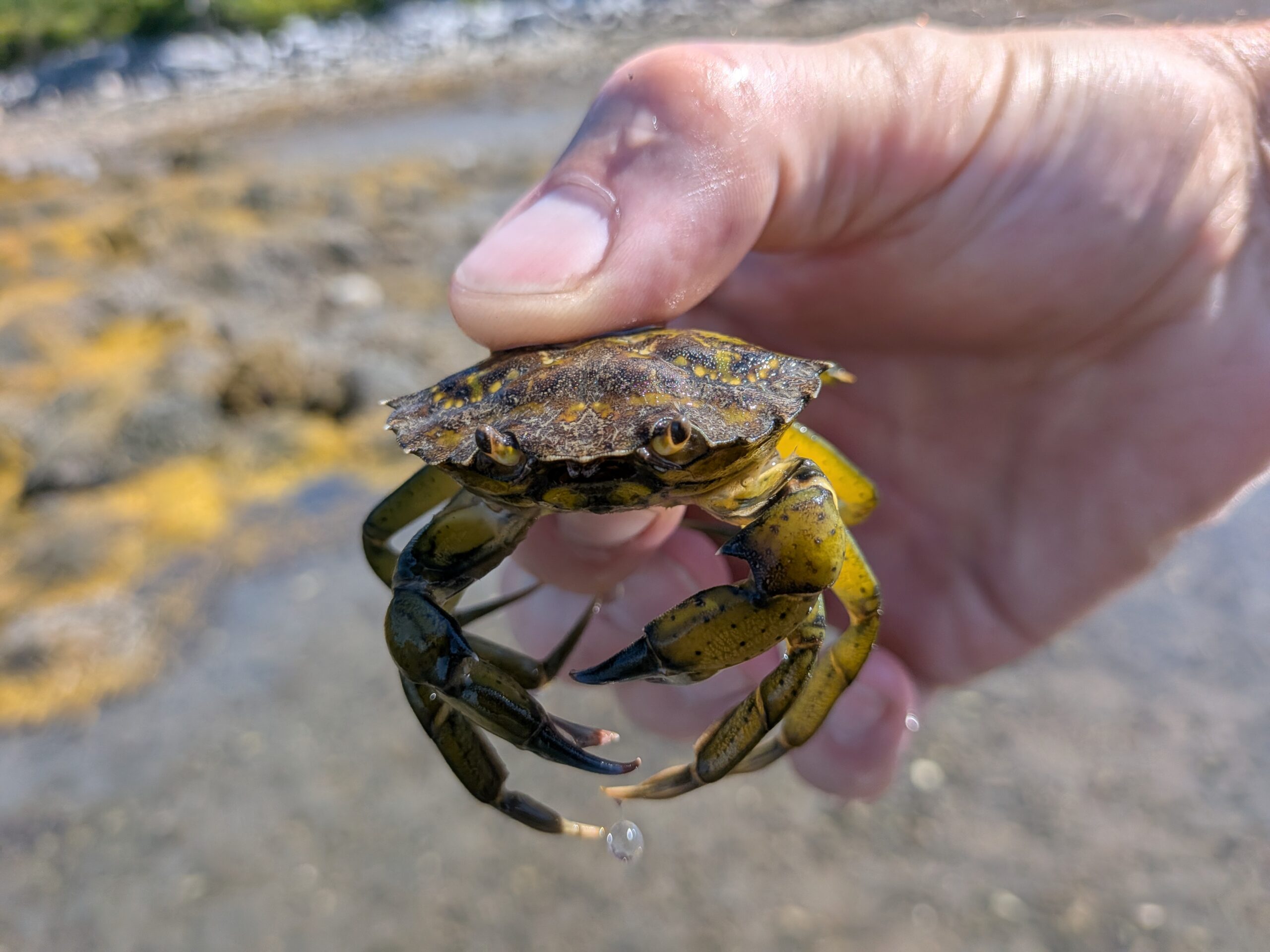
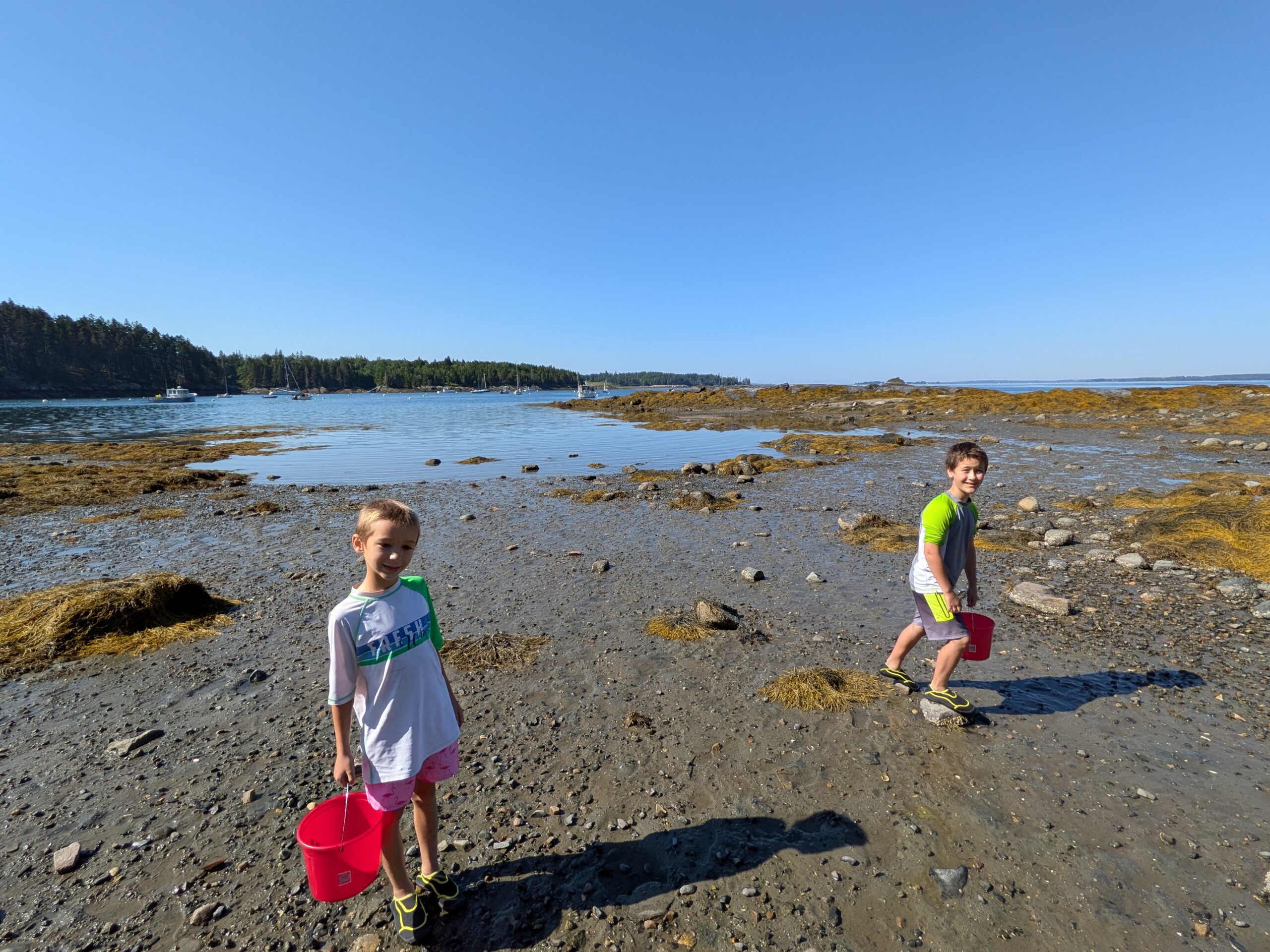
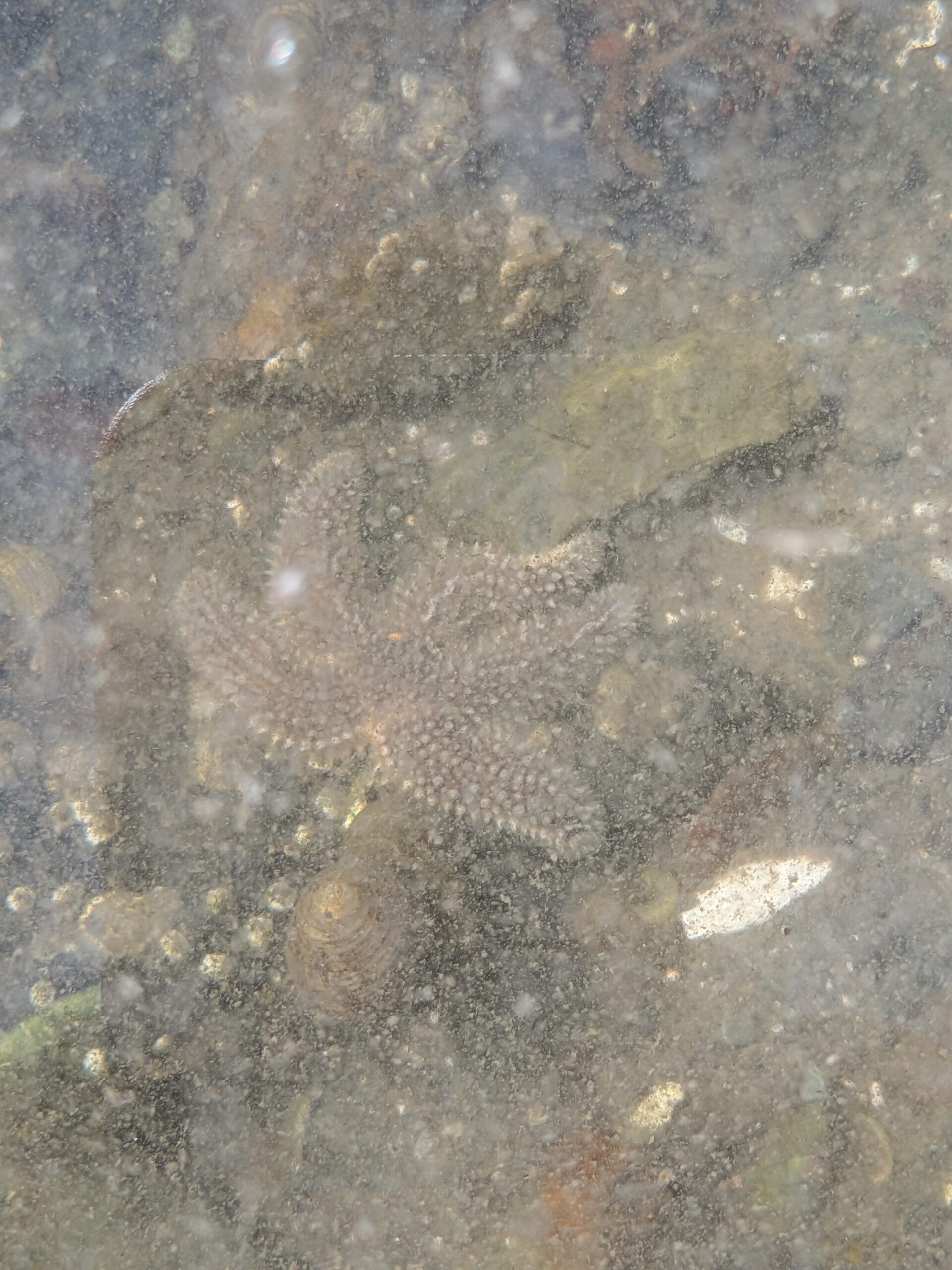
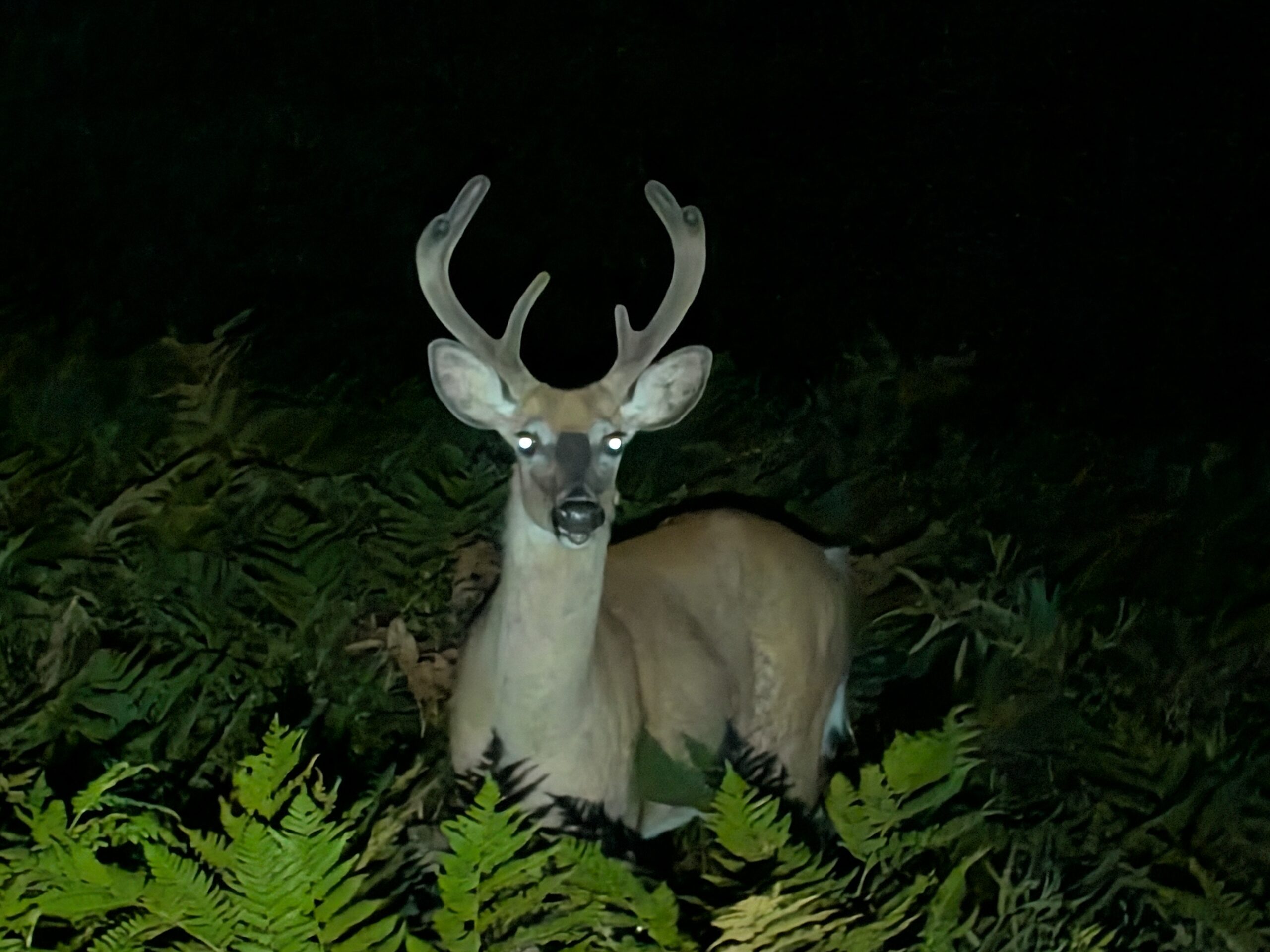
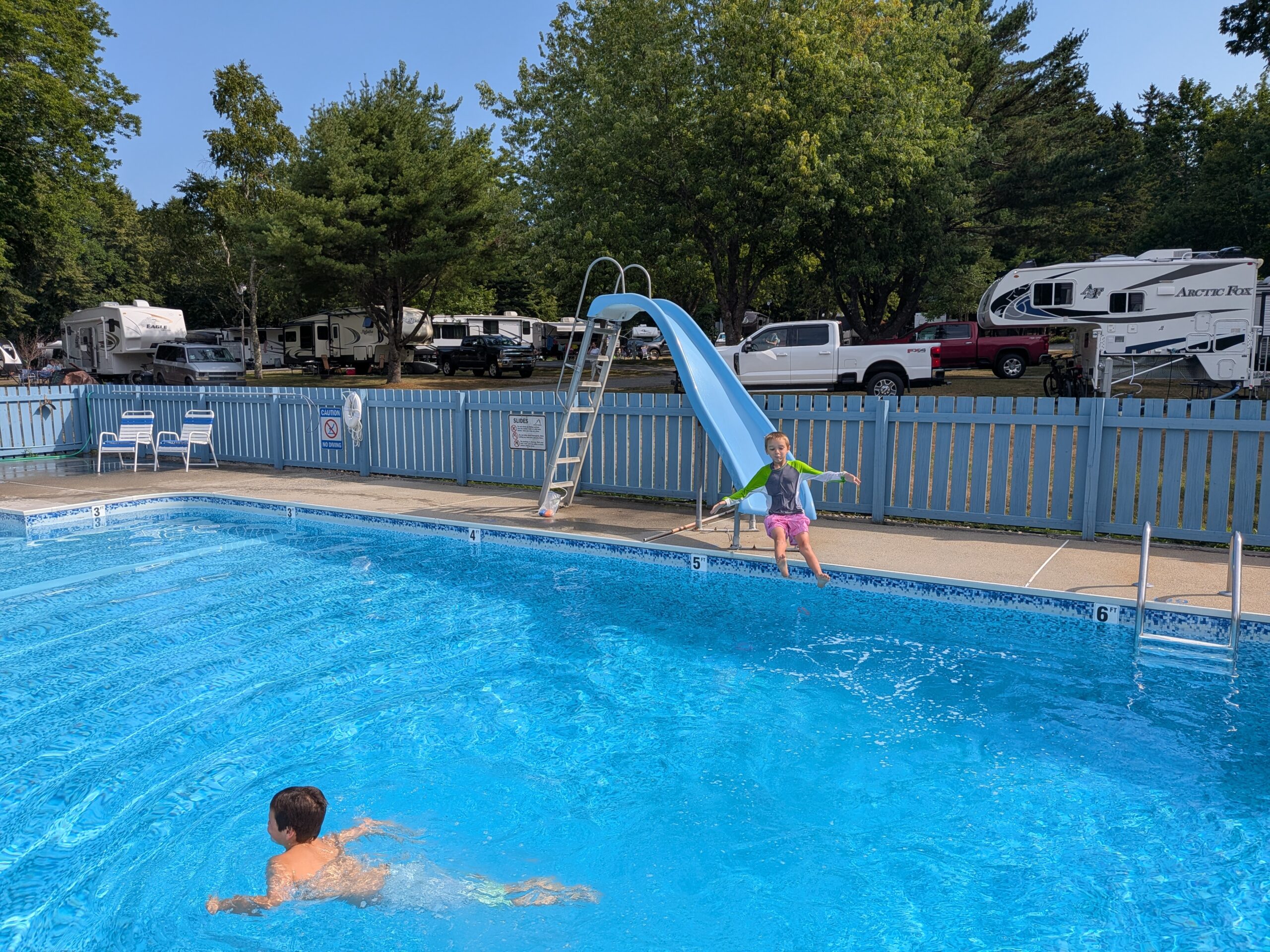
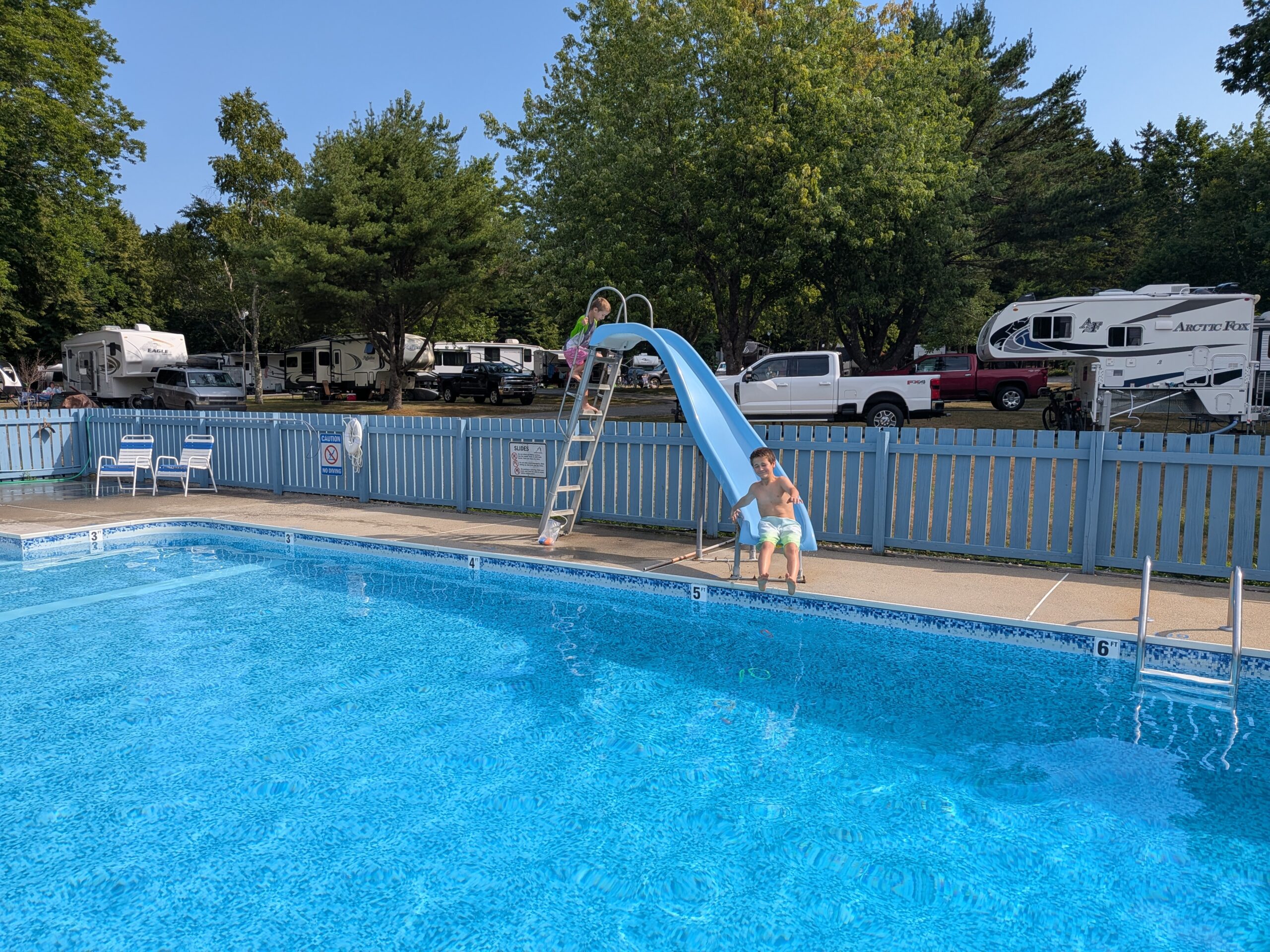
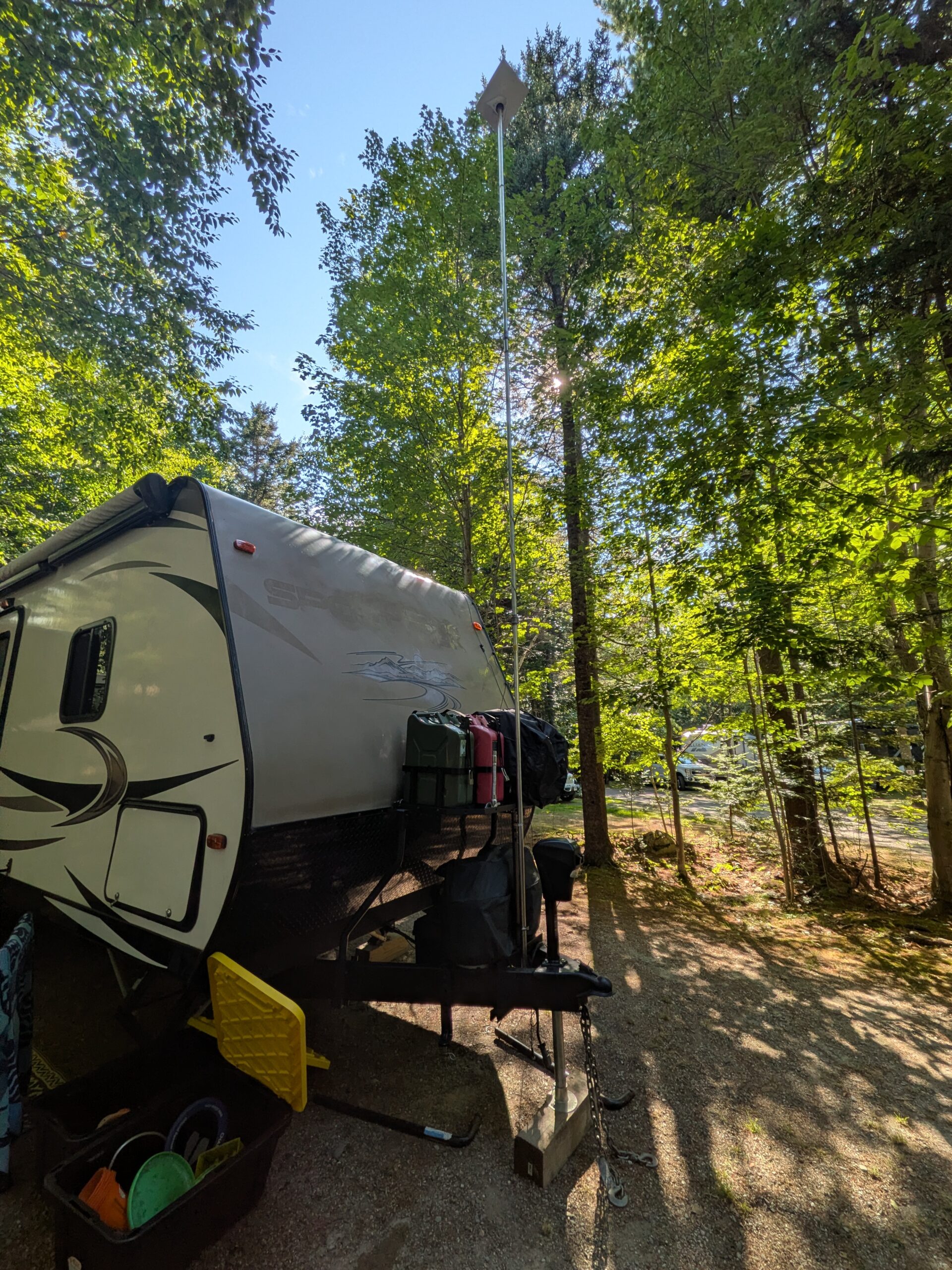
This leg of the journey was supposed to be our “vacation time.” No homeschool for the kids, just a chance to enjoy everything Acadia National Park and Mount Desert Island have to offer.
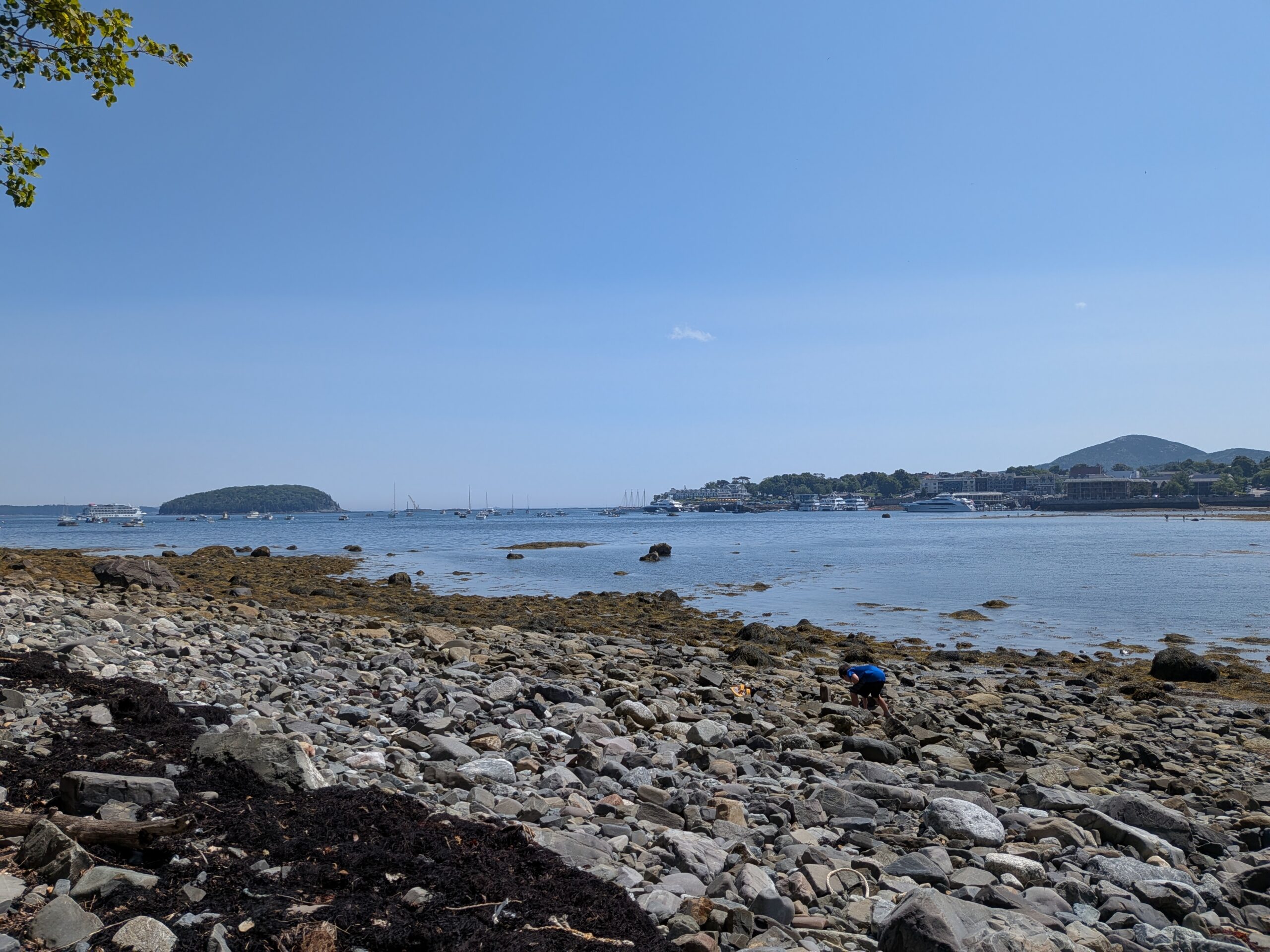
It started great. We spent lots of time exploring tide pools, found several new hikes, and after even more repairs (this time replacing the bike’s shifter cable), we were finally able to get some bike rides in as well.
Friday night we caught the once-a-night “Timber Tina Lumberjack Show“, which was a surprising amount of fun. Timber Tina is a timber sports competitor and commentator turned entertainer who MC’s a fun Lumberjack competition between two teams of two. The boys had a lot of fun watching them throw axes, climb trees, play jokes on one another and more.
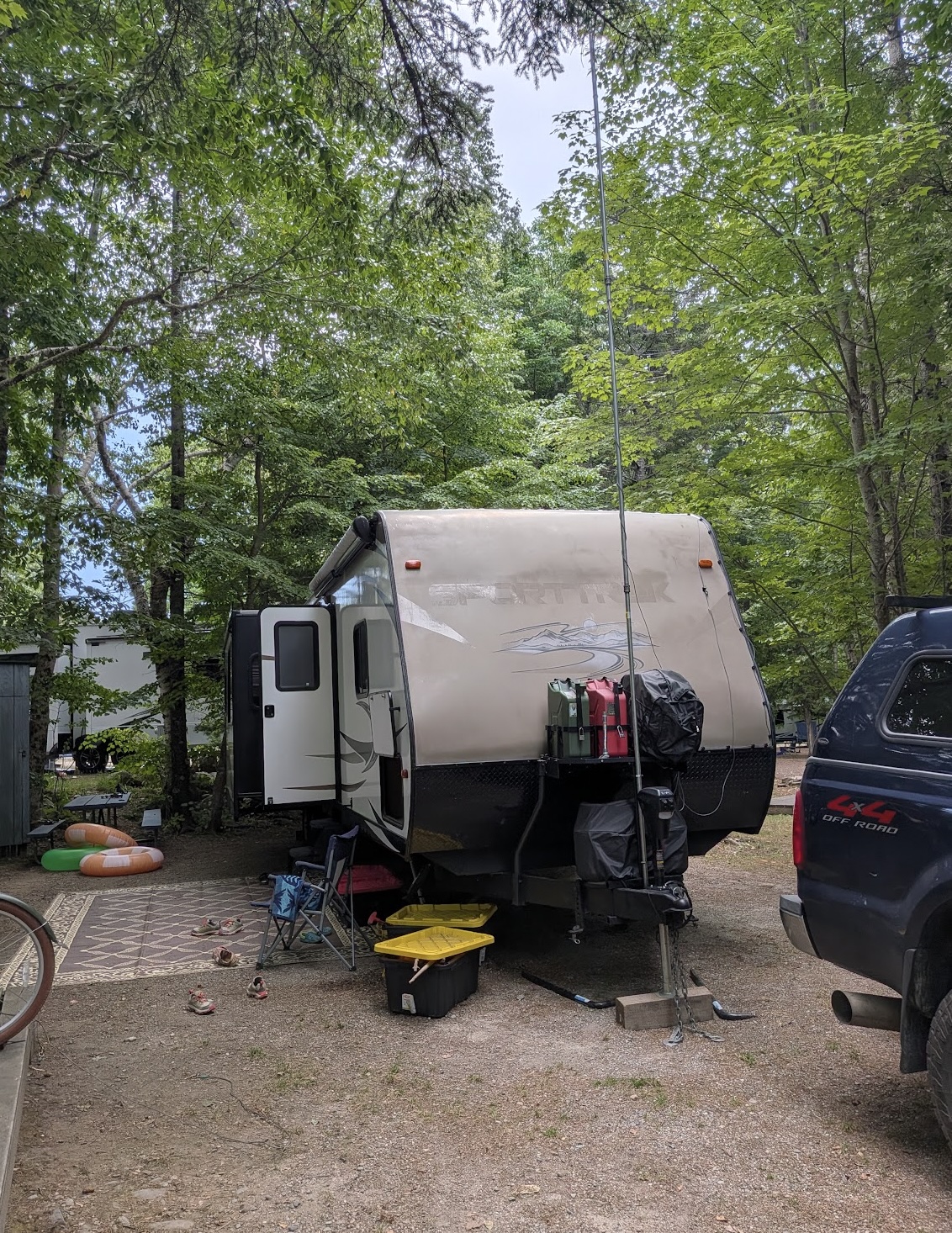
On Saturday we headed to the local Wild Blueberry Festival at the Somesville Library, where Meg and the boys loaded up on books, fresh wild blueberries (which are everywhere around here—you can hardly walk down a trail without finding some), jams, and other local treats. It poured rain most of the day, but “the garage” in the back of the truck had everything we needed to stay dry.
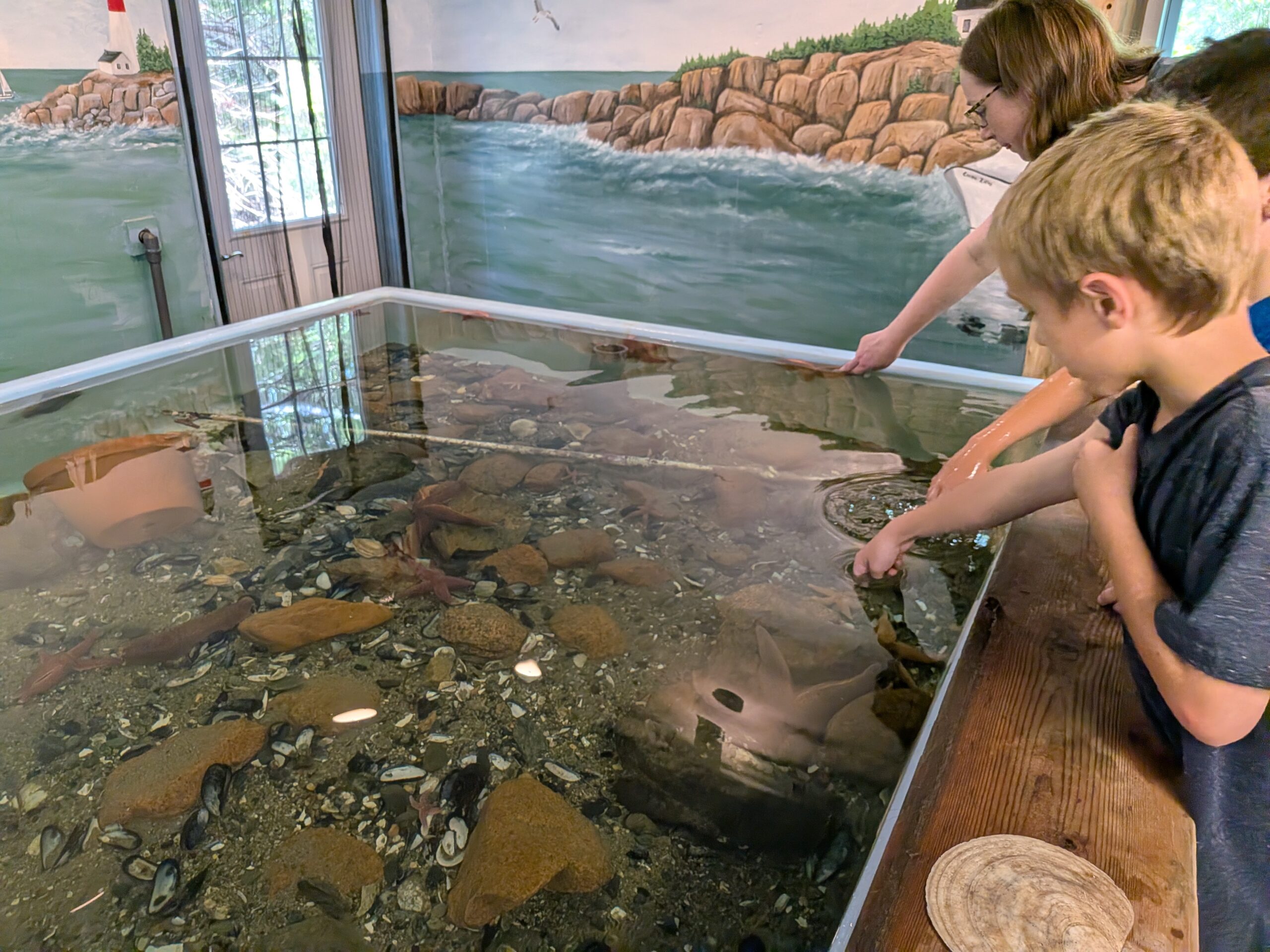
After filling up on blueberries, we took Meg tide pooling at Back Beach for the first time, grabbed some lunch, and then headed to the Oceanarium, a very small but educational aquarium and museum that has a big touch tank, rare lobsters and a complete whale skeleton. The head biologist really took a liking to Finn and took him around everywhere showing him cool things.
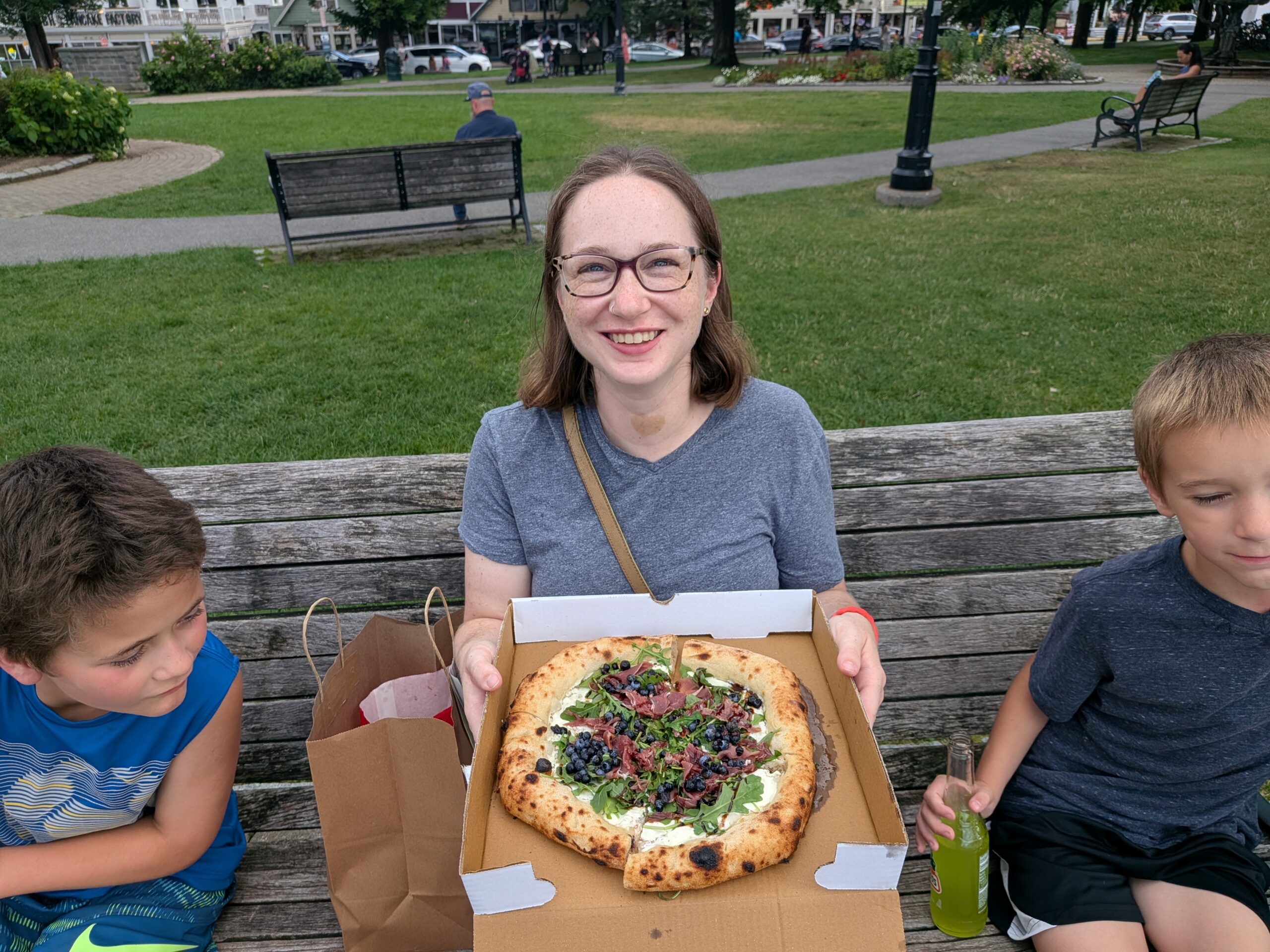
Afterwards we headed into busy Bar Harbor to get some dinner and treats. We found pizza topped with wild blueberries (I’m serious—they’re everywhere, and that’s a very good thing), then finished the evening with ice cream from CJ’s, the same place we stopped with my parents back in 2017.
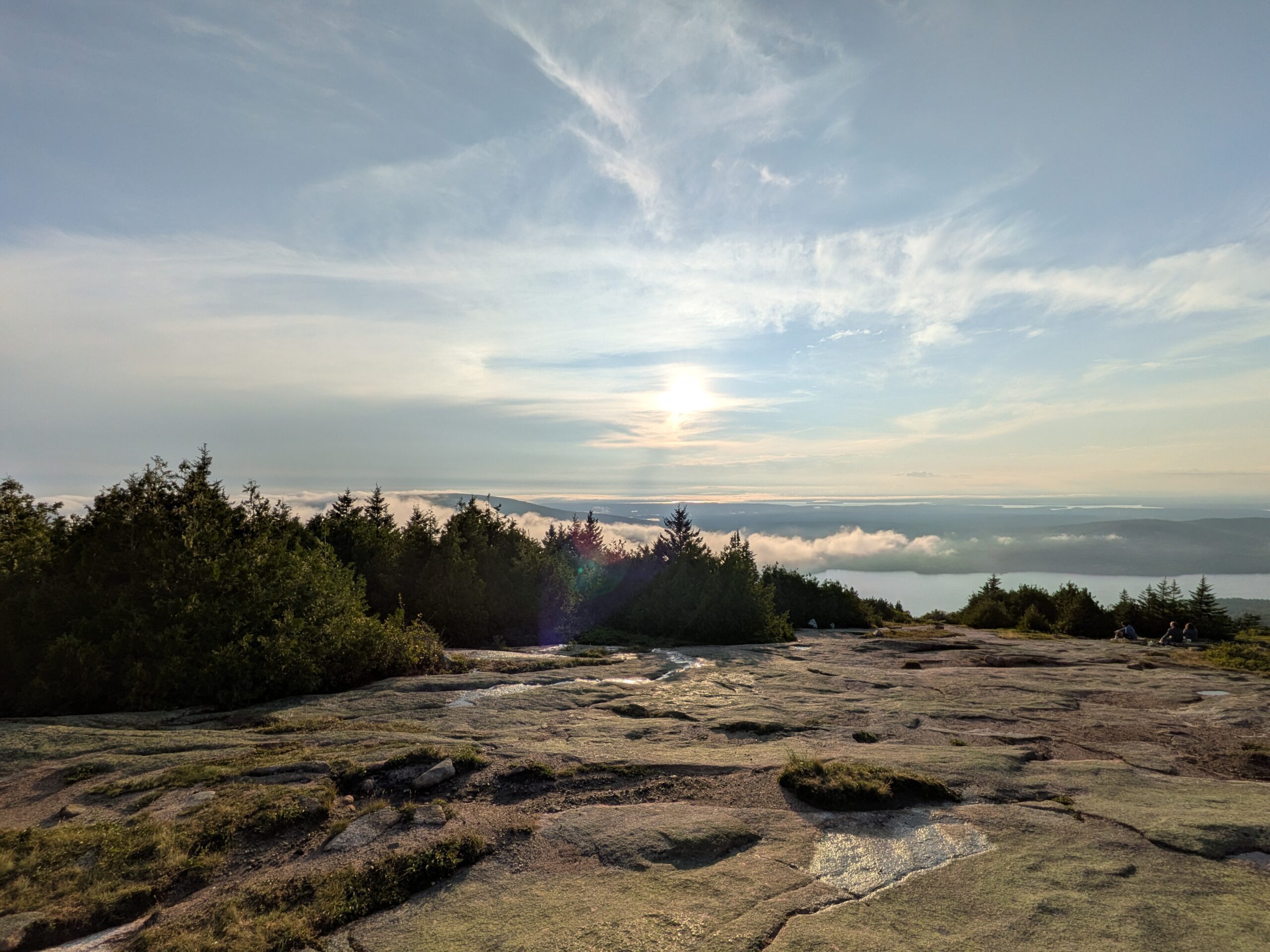
From there we drove to the summit of Cadillac Mountain, the highest peak in Acadia, to catch the sunset and scramble around the rocky trails near the summit. It was also home to mountain top gift shop where we bought the very first whoopie pie we ever had back in 2017. This trip, Gabe is proud to report that he has eaten a total to four whoopie pies across three different varieties. The views from the mountain were spectacular, even if the clouds robbed us of a proper sunset.
Sunday was when things started to go rapidly downhill for me.
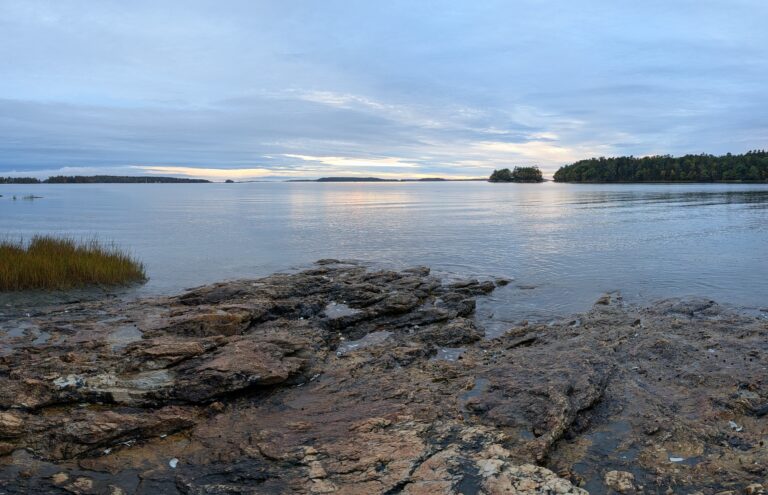
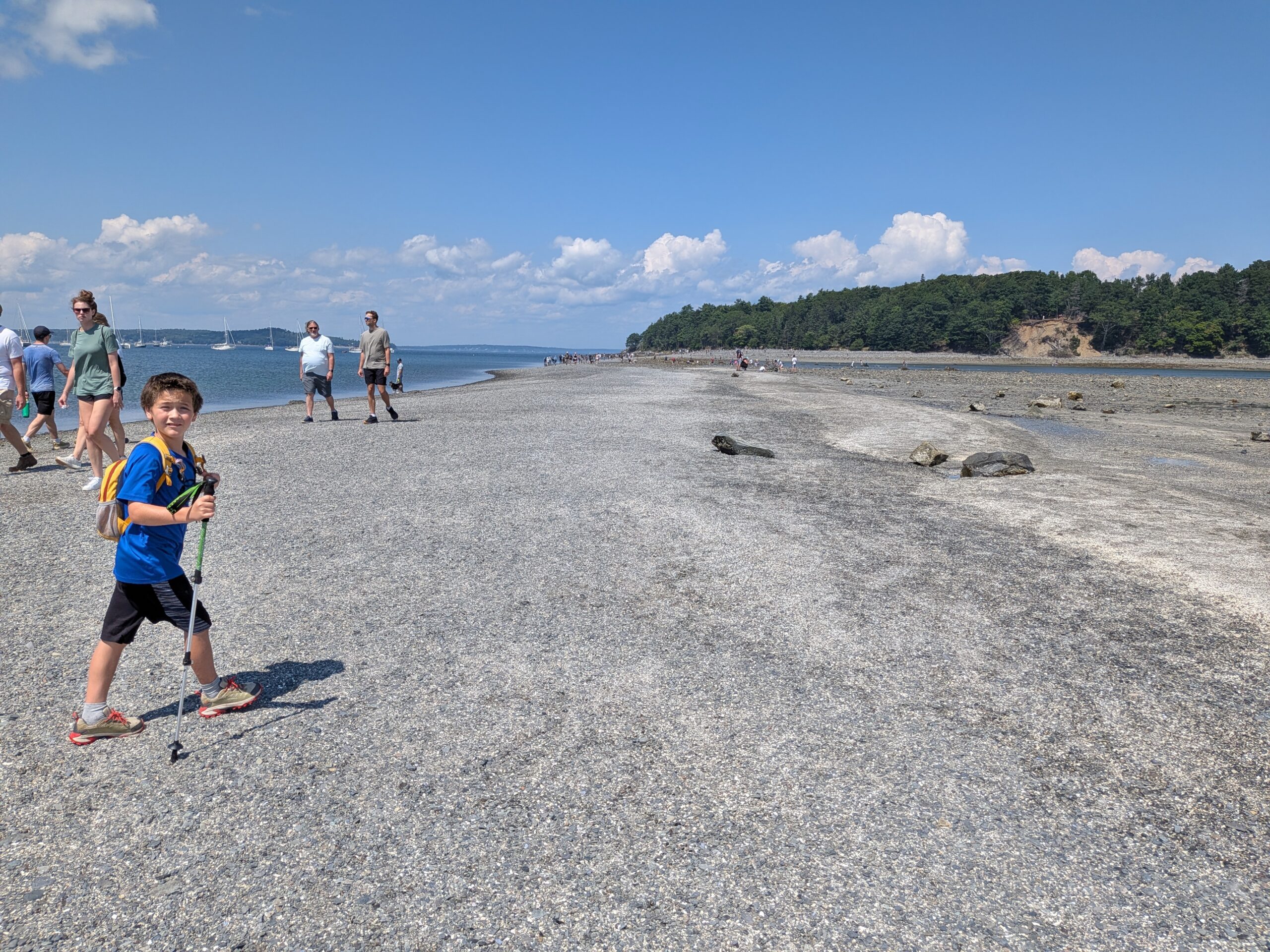
We made it into Bar Harbor, missed the farmers market, but did make it out onto the sand bar that leads to Bar Island. It is a natural bridge that is only accessible during low tide. We hiked across the land bridge and the island loop, explored more tide pools, and eventually made our way back to the camper.
By the time we got back, I could barely stand. I was seeing spots and I nearly passed out. My skin was so irritated, itchy, and painfully tight that I could hardly tolerate it, and I started struggling to breathe. It was miserable.
Even after nearly ten hours of sleep, I felt even worse the next day.
My best guess is that my body is reacting to the combination of very high humidity, limited air movement, and relatively poor air quality. It is wild, when you turn on a flashlight in the dark here there is so much in the air that you actually can’t see that far. Its like driving through light snow at night. It is also possible that spending so much time wading in the tide pools is contributing to my struggles as well. Cold water and I have a long history of not getting along, and salt water may be adding another layer to that reaction. I struggled with something very similar during our first stay in Vermont.
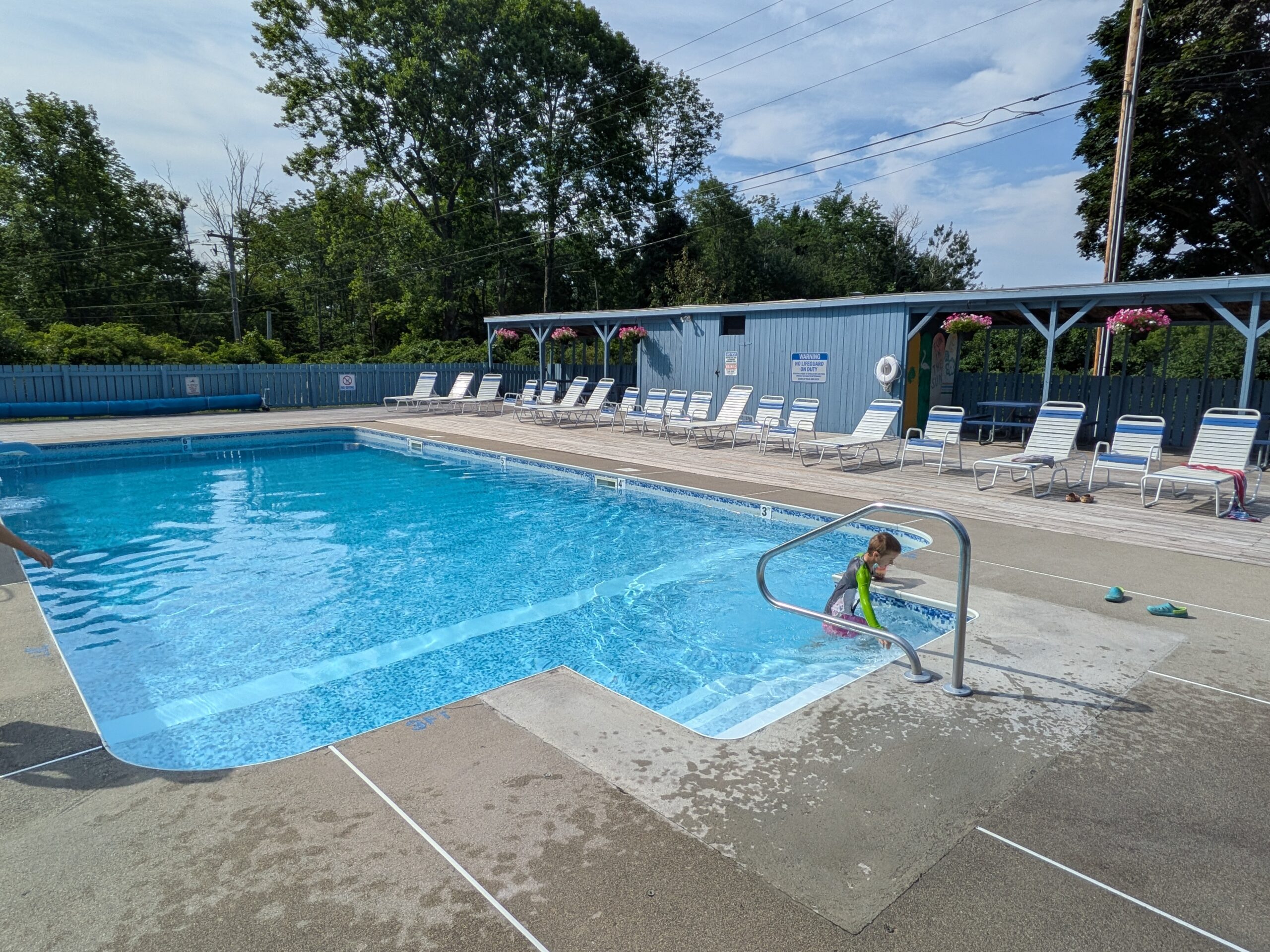
Since my symptoms were at their lowest point in on record when we first arrived here (most likely because of our unexpected stop in Vermont), I hoped my “bucket” was empty enough that I could enjoy the water with the boys. I even foolishly got into the campground swimming pool.
It didn’t work out.
It sucks, but I knew these days were coming. The whole point of this journey isn’t just to discover what helps—it is also to learn what doesn’t. That lesson hits a little harder when you came here hoping for a vacation filled with hiking, biking, and swimming with your kids.
Still, every place that doesn’t work teaches us something. Hopefully those lessons eventually lead us to a place that does.
Our Favorite Moment
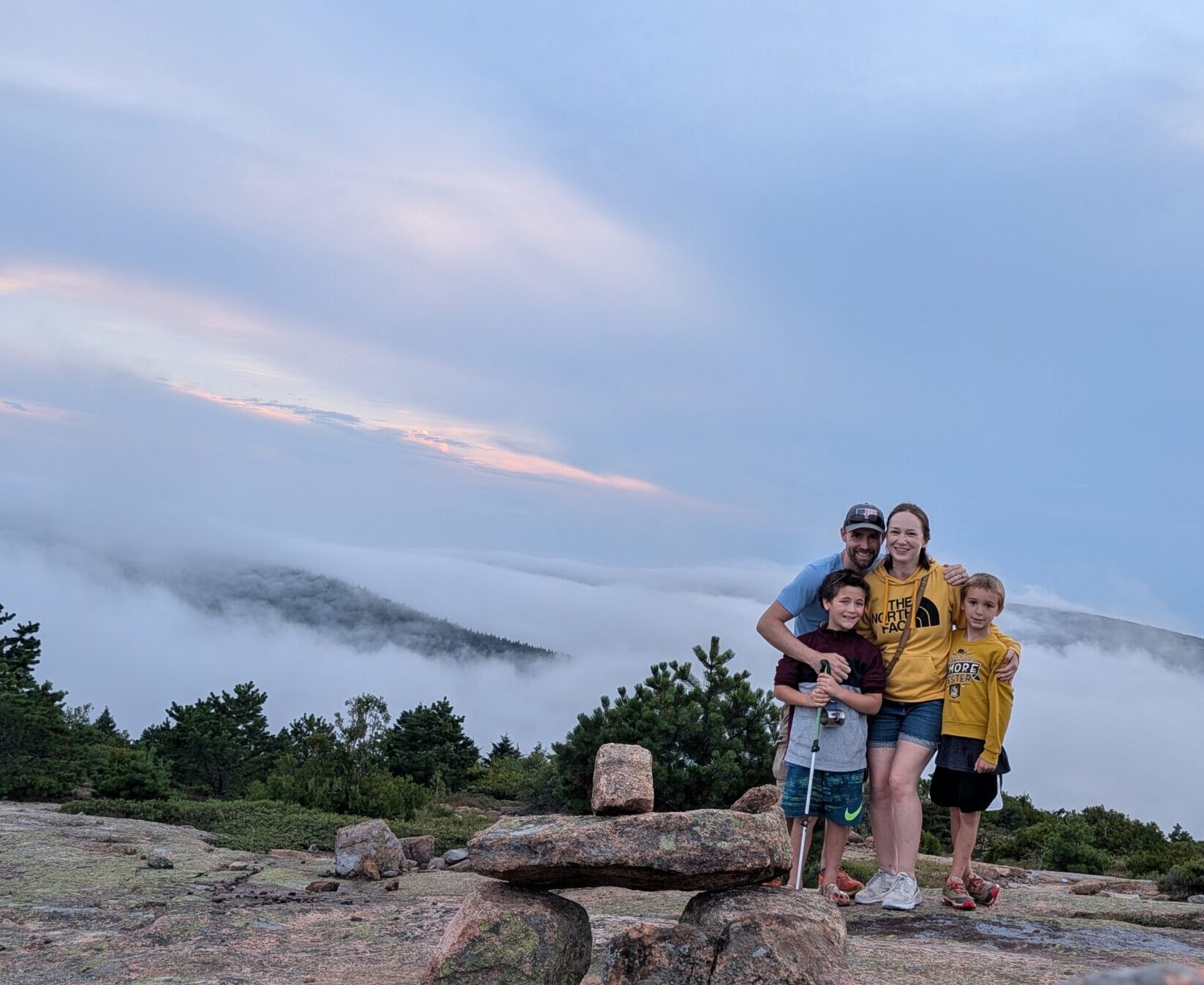
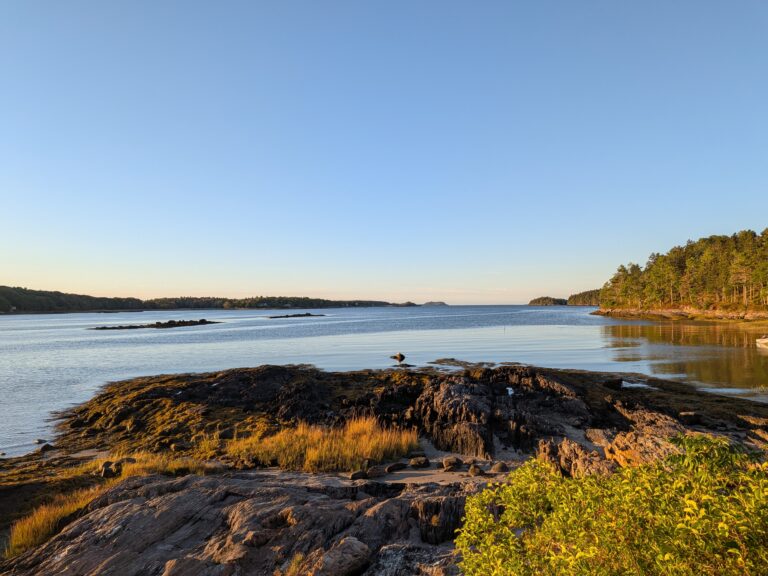
Spending the “Golden Hour” before sunset on top of Cadillac Mountain
Observations

The Journey Continues
We are visiting 45 campgrounds in 300 days to find a place where our family thrives and my symptoms improve. Follow along as we share what we learn along the way
Graham Simplified
Scorecard
2 / 10
2 / 10
2 / 10
9 / 10
7 / 10
2 / 10
Yes
Overall
6
/ 10
- This is a super interesting test because it has the ecology we are looking for, rocky conifer forests with little to no sub canopy, weeds and grass. However it DOES NOT have the sea breeze to help turn over air quality, making it a very interesting test to see if both a necessary to help me feel better or can we do without being on the ocean shore.
- It wasn’t until Monday that I realized that wadding in the ocean was causing significant MCAS symptoms just like wadding in cold water did in Vermont. A few days out of the water and my legs were improving.
- Even staying on the “quiet side” of Acadia National Park the traffic and amount of tourists is crazy compared to when we visited in the fall almost a decade ago.
Next we are headed to:
Rockport, Maine
A beautiful town right on the Atlantic Shore to test how sea breeze impacts symptoms. First we have one more week here in Southwest Harbor.