
When Chronic Illness Tries to Change Who You Are – An MCAS Sufferer’s Rant

There is one question I have been asked more often than I expected since my MCAS symptoms really started ramping up a couple of years ago. I think it is almost always asked with the best of intentions, but it lands harder than people realize. That question is: “But…you don’t really act like a sick person.”
Whether people mean it this way or not, what I hear is something closer to: “How bad can it really be? You’re still hiking. You’re still traveling. You’re still out doing things.“
Most of the time I smile and give some version of the same answer. “I do my best to manage.“
This article isn’t that answer. This is what I wish I could say.
This is an illness no one sees
Right now I’m sitting in a laundromat typing this article. To everyone else here, I probably look completely normal. No one knows I almost blacked out this morning.
No one knows that my legs and feet still burn from wading through a tide pool three days ago. That my skin feels so irritated I want to rip it off. That my throat feels like it’s slowly closing with every breath. That my joints hurt so badly my arm feels like it might give out from lifting a bottle of detergent.
No one knows that when I walk outside into the afternoon sun, there’s a good chance my skin will begin feeling like it’s covered in freezing acid before the rash even starts. No one knows that my stomach requires laxatives every day just to function or that my mouth is full of sores that make eating and talking hurt.
They also don’t know that three days ago I ran up a mountain.
Literally.
Three days from now I might be able to do it again. Or I might not be able to walk around the campground.
I honestly don’t know.
That’s part of what makes MCAS so difficult to explain. So much of it is invisible, unpredictable, and completely outside my control and what is within my control is such a small portion of grand total of triggers that can lead to worsening symptoms.
The person it slowly turns you into
My dad has Ménière’s disease.
The illnesses are very different, but one day he described living with it in a way that immediately made me think of MCAS.
He said it feels like having a condition that makes you into someone you don’t want to be.
I don’t think I’ve ever heard a better description of what chronic illness does to a person.
It isn’t just that your body changes. Eventually it tries to affect your personality too.
He is exactly right, when you have a condition that you have so little control over you hyperfixate on what you can control just hoping that you might have a better experience that day, week or maybe even the rest of your life because you never know how permanent your next flare is going to be.
Going out for ice cream? That could be a huge risk. Dinner with friends? I can probably watch everyone else eat. Swimming with my kids? Maybe…if I can find enough shade, the water isn’t too cold, and my skin is cooperating that day. Traveling somewhere new? That might mean the best week I’ve had in years or it could leave me bedridden for days.
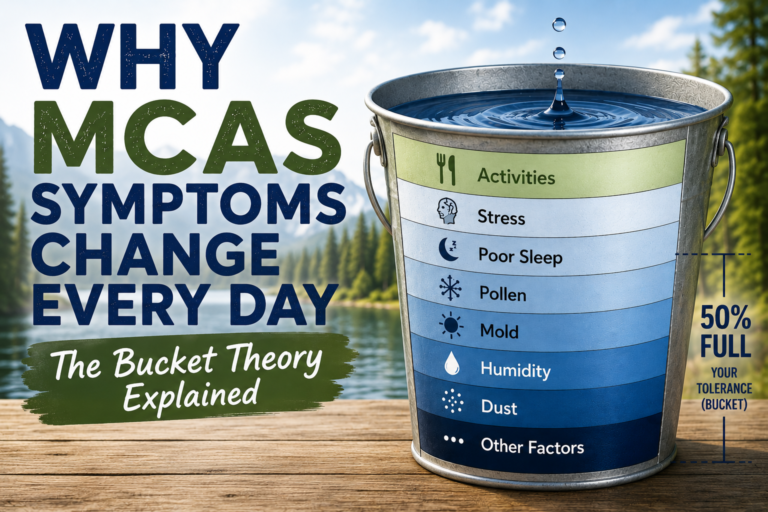
Even when I do everything “right”—eat a restrictive diet, take my medications, prioritize sleep, manage stress, and avoid obvious triggers—I am still only controlling a tiny fraction of what determines how I feel.
The rest belongs to the environment, the weather, the pollen, the mold, the humidity, and whatever my immune system decides to do that day.
Living like that slowly changes you. Not because you want it to. Your body is constantly screaming that things are not okay, that they may never be okay, and you have to answer back every day:
I can do this. I will be okay.
Choosing who gets to decide
There are days when I wake up feel terrible and realize there is nothing left to do.
There isn’t an emergency medication. There isn’t a rescue treatment. There isn’t a button I forgot to push. Everything that might have helped has already been done and now I just have to live through whatever today turns out to be.
When things first became really bad Meg would often ask if I wanted to stay home or skip whatever we had planned.
Almost every time I said no. Not because I felt okay, I usually I didn’t. I said no because I learned pretty quickly that resting didn’t shorten my flares. Running didn’t make them longer. Sitting on the couch didn’t magically fix anything.
In the end I couldn’t control whether I had MCAS, but I could still choose what kind of person I wanted to be while living with it. So I made a decision very early on: I was going to learn how to live with this disease, not become a “sick person”.
So when you see me hiking, exploring tide pools, traveling across the country, or even running up a mountain, don’t mistake that for someone who isn’t struggling. It’s someone trying very hard not to become someone they don’t recognize. To keep their mental health from completely deteriorating. To try to maintain connection with their wife, kids, family, passions and the life they are trying to build.
The people around you probably know more than you think
To those who are struggling with “invisible conditions” like I am. One of the hardest parts of the experience is wondering if anyone really understands. These conditions and what they require to manage them are incredibly isolating.
I spent a long time assuming people didn’t understand. Looking back, I think I misread a lot of people. I assumed they thought it was all in my head, and that’s on me. When I started talking to people about having MCAS, years after I started struggling with it far more people told me, “We knew something was wrong.” than told me, “You don’t seem sick.”.
They couldn’t see all my symptoms, but they could see that something had changed.
That realization they shared meant more to me than I think they know.
To Those with “Invisible Conditions” Please, Keep Fighting
This disease and so many others are just cruel. Some days I am angry. Some days I’m exhausted. Some days I genuinely wonder how much longer I can keep doing this.
So on the worst days, I remind myself of something. Something that probably sounds very corny and intense coming from someone like me, but this is what I tell myself:
When the world tells me I can’t withstand the coming storm, I calmly and politely tell the world,
I am the storm.
Not because I always believe it.
Because sometimes I need to hear it.
If you’re reading this while fighting MCAS—or Ménière’s disease, long COVID, POTS, or another invisible illness—you do not have my permission to stop fighting.
I know it isn’t fair.
I know you’re tired.
But the person you were before this illness is still there.
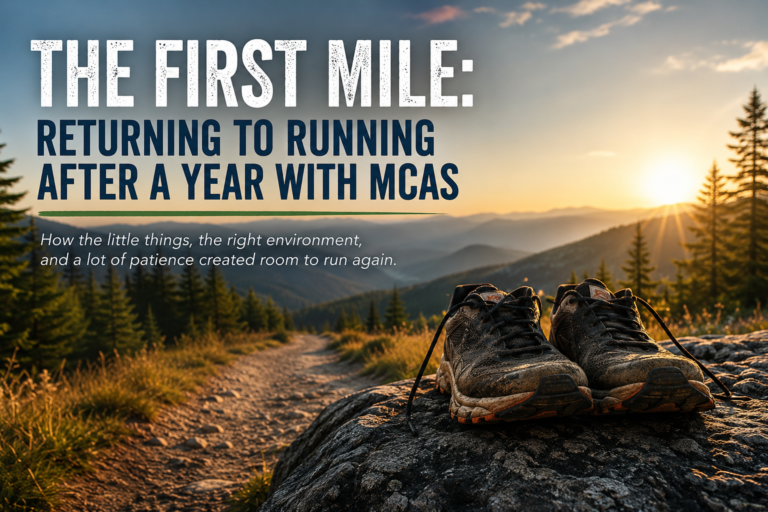
They’re worth fighting for. So I know that tomorrow morning I’ll get up and do all the little things again. I’ll take my medications. I’ll eat the foods I know are safe. I’ll keep tracking my symptoms. I’ll keep looking for answers. I’ll keep trying to be a good husband and a good dad. And when my body lets me, I’ll lace up my running shoes.
Not because any one of those things is guaranteed to work, because they’re how I remind myself that I’m still me.




I love your blog. It encouraged me to show more empathy! We truly do not understand how others feel. Thank you for the reminder.
On another note, I am enjoying your gorgeous photographs and am traveling vicariously!
Sending love to you and the whole family!!
Thank you so much for this and I’m so glad you’re enjoying the photos and traveling along with us! Thanks for following our journey and for taking the time to leave such a kind note.