
80 Days, 11 Campgrounds: What We’ve Learned So Far
After 80 days, 11 campgrounds, and more than 1,300 miles, we are starting to understand what full-time RV life actually feels like. Some lessons have been practical, like how many shoes a family really needs. Others have been much bigger, like how mountains, air movement, food, and recovery time may all affect my MCAS symptoms.
Full-Time RV Life
Shoes are very important
When we left on our year-long RV journey we packed everyone two pairs of athletic shoes and some sandals. We very quickly learned that was not enough to meet the demands of our new lifestyle and how important good shoes are.
Our boys’ flat bottom basketball shoes left them skipping and sliding over exposed rocks every hike and since most hikes in the Northeast are almost nothing but exposed granite, it was a big problem. We were able to order them nice hiking shoes and I have yet to see them choose to wear anything else when we leave the campground.
We also quickly realized our mistake in not bringing water shoes. Growing up in Michigan we never thought of streams and lakes as having anything other than muddy and sandy bottoms. It took a few stops to eventually find some during the peak of demand in the early summer, but once we did the boys enjoyed the beautiful streams of Vermont, New Hampshire and Maine so much more. Finally, Crocs (or Wal-mart brand knockoffs) have been perfect for Meg and the boys around the campground. I tend to prefer flip-flops, but having some sort of very quick slip-on shoe to walk Remi or walk to the swimming pool is a must.
Wet Clothes – what do you do?
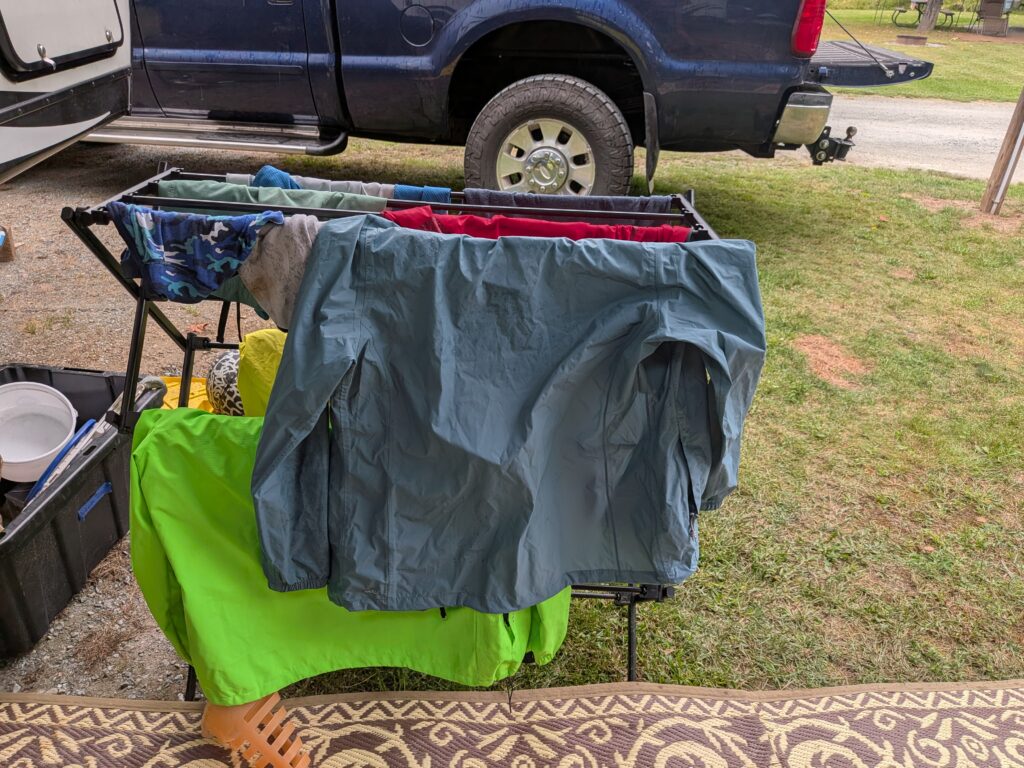
From the research we did to prepare for this trip we knew that wet clothes were going to be a challenge during our trip. Not necessarily the fact that they exist, normally they are just a sign that people are having a good, fun day, but what to do with them in a small camper that doesn’t result in high indoor humidity or moldy clothes. It was only after we made it a few weeks into our trip that we saw these handy collapsible and expanding drying racks that you can put up under your RV’s awning. It was a game changer to have a dedicated outdoor spot to dry clothes that collapses small enough to fit in the RV’s storage compartment.
Laundry…. It’s still a thing
Going into this we figured we would be able to take care of our dirty clothes at campground laundry facilities, however we quickly found out that many campground laundry facilities are lacking either in function, cleanliness or both. As a result the boys and I found that sometimes it is a lot easier to just pack up computers and head to the local laundromat for an hour and a half.
Homeschool isn’t the same as school
One of the things we were most nervous about before leaving was homeschooling. I wondered to myself: Would the boys fall behind? Would they hate it? Would we be able to teach them well enough?
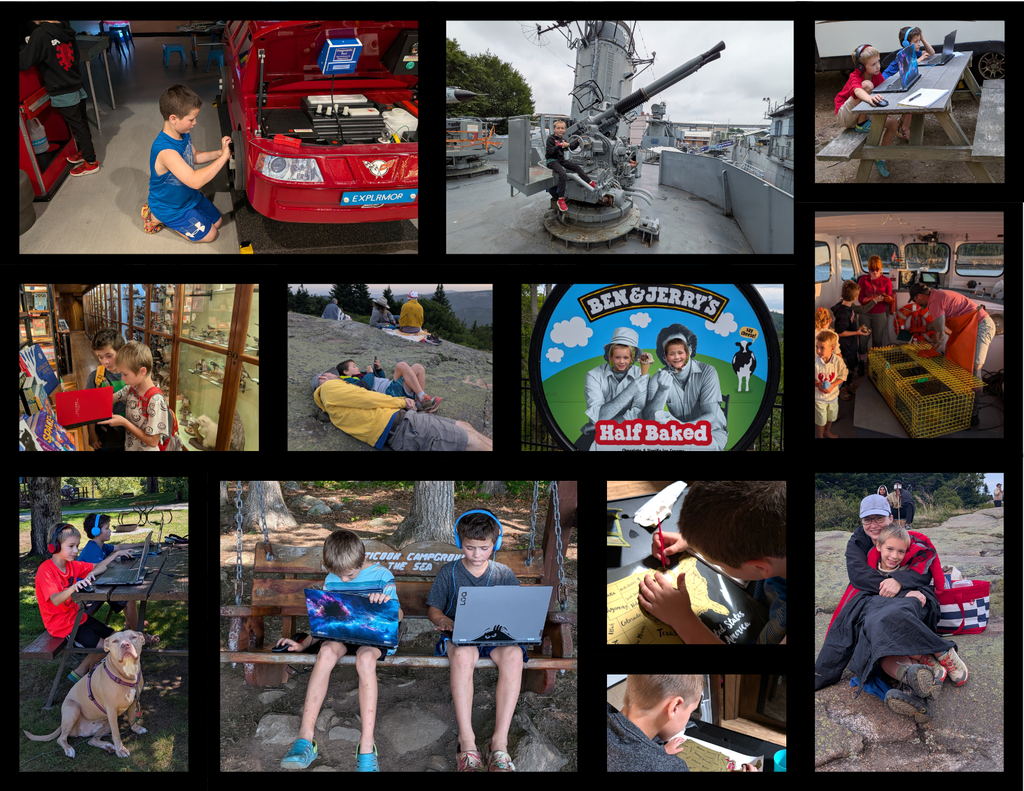
So far I don’t think they are falling behind, they don’t hate it and only time will tell if I can teach them well enough. The biggest difference isn’t that they’re learning different things. It’s that we have the flexibility to learn differently. If math takes a little longer one day, that’s okay. If we spend an afternoon exploring tide pools, hiking through a gorge, or visiting a science museum, those experiences become part of school instead of something we have to squeeze in around it.
We’ve also discovered something we never really thought about before: one-on-two instruction is incredibly powerful. As a result we are working on areas in the boys education that I hope will help prepare them for when they return to regular instruction such as resilience, answering strategies, penmanship, emotional regulation and more.
Some days school happens around the picnic table. Other days it’s in the camper because it’s raining. Sometimes it’s on a bench overlooking the Atlantic Ocean and that is kinda awesome.
The garage is the best
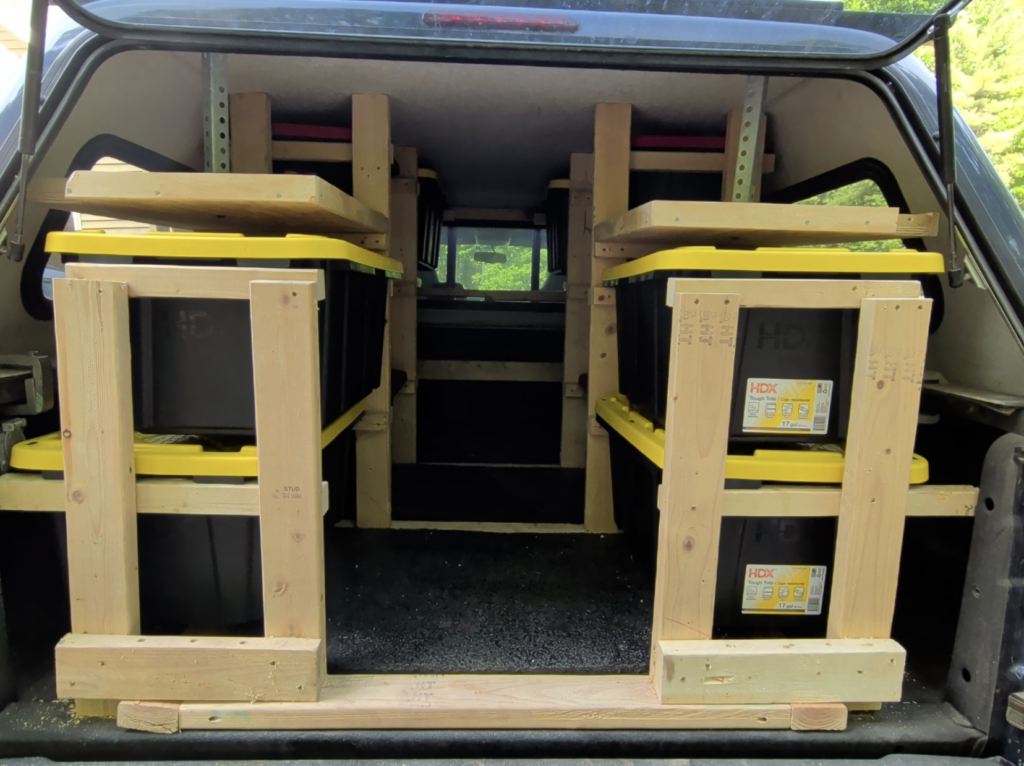
We have affectionately come to call the storage system I built in the back of our F350 “the garage”. I am constantly back there, getting rain coats, swim toys, trekking poles, tools to fix whatever new thing broke, Remi’s food and more. It really is one of the best things we did in prep of our trip is to put in place some good organization!
Remi, our super-dog
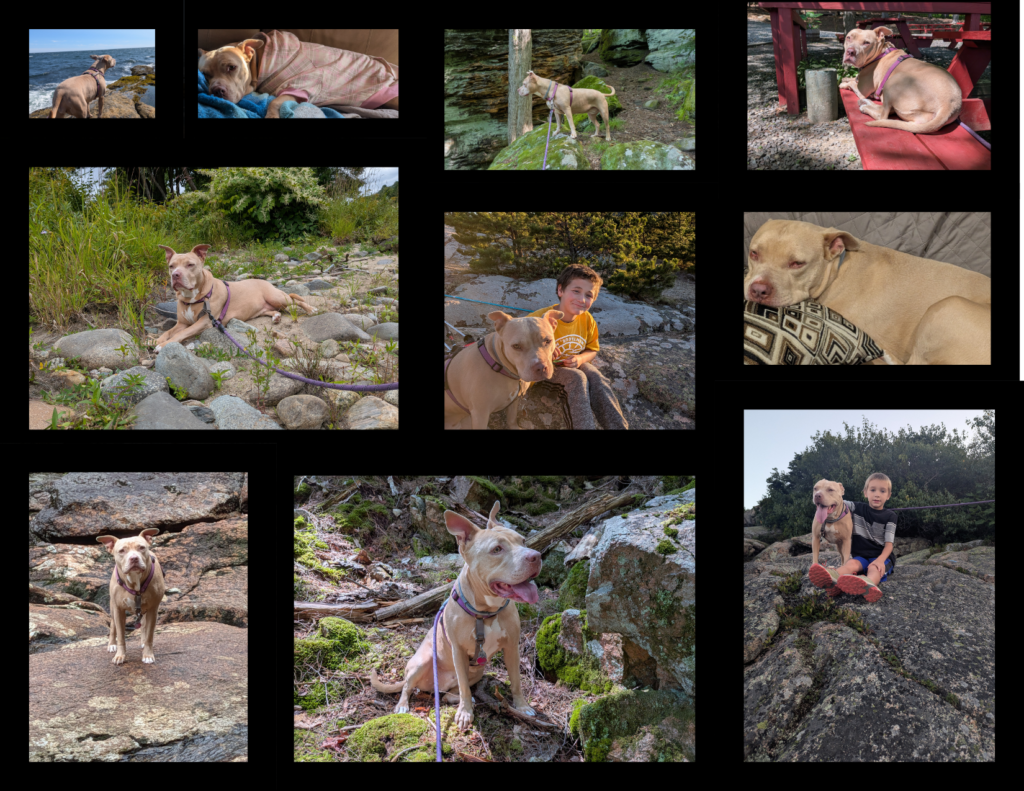
Our dog is best known for her lack of understanding of personal space and her ability to sleep regardless of what is going on around her or to her for that matter. However, for a dog that can’t even summon the energy to jump into the truck, she has proven to be an incredibly capable camp dog climbing mountains, navigating rocky sea shores, waiting patiently on city streets and working her way up waterfalls despite a hatred of water. She has proven herself to be a super dog capable of anything we need of her, from snuggles to mountain climbing.

The Northeast
Subarus, Solar Panels and Smiles
My best summary of the Northeast we visited is: Subarus, solar panels, and super kind people.
The rural parts of Vermont, New Hampshire, and Maine are snowy enough that almost everyone drives something with all-wheel drive or four-wheel drive, and a surprising number of those vehicles seem to be Subarus. We also noticed far more home solar panels than we expected, especially compared to what we are used to seeing in West Michigan.
But what stood out most was the tone of the places we visited. There were yard signs, billboards, local businesses, and community messages everywhere reminding people that they matter, that they are welcome, that they can keep going, or that kindness still matters. Some were political, but many weren’t. They were just quietly encouraging.
Maybe we happened to visit the right towns at the right time, but the Northeast we experienced felt much warmer and more welcoming than I expected.
Bugs and Ticks
I don’t know if we just were never in the right place at the right time, but they were SO much better than our home in Montague Michigan. No deer flies chasing you out of the woods, only one tick on our dog the entire trip instead of multiple a day, and hardly any mosquitoes to speak of. Honestly it was one of the best parts of the trip to be able to enjoy all the beautiful nature we found without needing to carry around bug spray everywhere.
A Chance of Rain, Means Rain
Kind of an odd one, but we found that when the forecast calls for rain, even a 20% chance in the Northeast, expect that it will rain. This was especially true in Maine and it is so different from West Michigan where we are so used to an 80% chance of rain never materializing.
Everything is Smaller
Towns, stores, crowds, schools and more. It was incredible to go to popular places at peak visitation time and still find that they weren’t packed. Even big cities in this area are very small compared to West Michigan which I always considered to be “out in the country”. It has given all of us a completely new perspective on how much of the rest of rural America lives.
The speed limits
Maybe I just didn’t pay attention as much in Michigan, but the speed limits here are both constantly changing and very slow. It is very common to have a 45 minute drive take as long as it does because half of the time you are driving you will be at 35mph or less. Secondly, the speed limit changes so frequently and typically by just 5mph at a time. It was actually a challenge to adjust to this after growing up in rural Michigan where it is: Driving in the city = 25mph, Driving out of the city = 55mph and Driving the highway = 70mph.
Schools
Just like everything else in the Northeast the schools are small. Grade level sizes of less than 20 in schools is extremely common with many schools having grade level sizes below 10. Additionally all schools, big and small are struggling to get the resources they need in order to provide for their students. Finding an affordable home in a stronger school district is a real challenge!
My MCAS
The surprising impact of the mountains
One of the clearest patterns we’ve found is that I consistently do better in and around the mountains of Vermont and New Hampshire. Jeffersonville and Littleton have both produced some of my best symptom scores despite being fairly typical northern hardwood forests with grasses, leaf litter, and mixed vegetation.
That surprised me because I had started to believe I needed a very specific forest type to feel well.
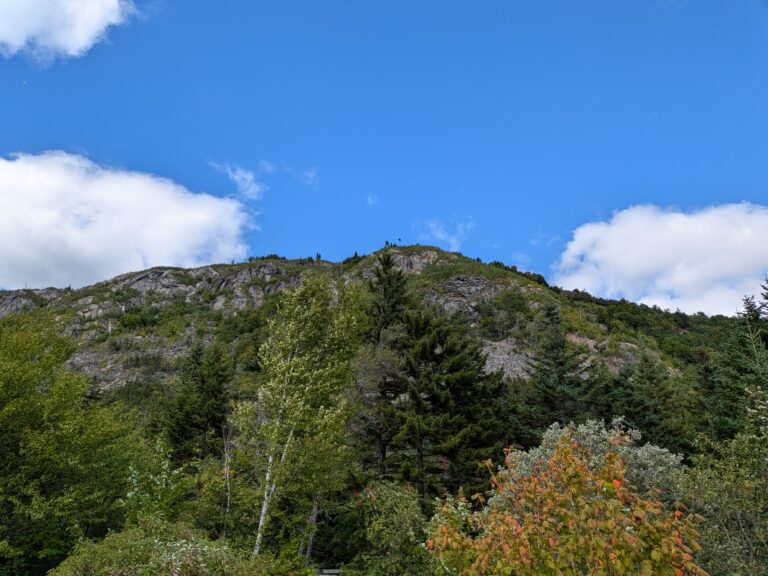
As we spent more time hiking, another pattern emerged. Within those already-good mountain regions, I repeatedly found myself feeling even better in certain micro-environments—rocky ridges, open ledges, and forests dominated by exposed stone, birch, and conifers with very little understory.
That has led me to think there may be two different questions I’m trying to answer. The first is which regions lower my overall symptom burden? The second is which specific habitats within those regions provide the greatest relief?
I don’t know the answer yet, but I think distinguishing between regional ecology and micro-ecology has become one of the most important lessons of the trip.
Air Circulation Might Matter More Than I Expected
One of the strongest patterns we have noticed so far is that I tend to feel better in places with more air movement.
At first I thought this was mostly about elevation, forest type, or proximity to the ocean. Those things still seem to matter, but the more locations we test, the more I wonder if air circulation is one of the bigger pieces connecting them.
The best mountain locations we have found so far, including Jeffersonville, Vermont and Littleton, New Hampshire, were not identical ecologically. They had mixed hardwood forests, grasses, leaf litter, and plenty of vegetation. But they also had something else in common: they sat in mountain regions with better airflow, cooler temperatures, and more frequent breezes.
The same seems to be true along the coast. Being near the ocean did not automatically help me. Southwest Harbor was beautiful, but the campground felt tucked into dense forest with high humidity and limited air movement. New Harbor, on the other hand, seemed better when we were closer to open shoreline and consistent sea breeze.
That has made me think less in terms of “mountains versus ocean” and more in terms of air turnover.
If pollen, mold spores, smoke, humidity, and other bioaerosols build up in stagnant air, then a place with constant air movement may lower my exposure even if the surrounding ecology is not perfect. I do not know that for sure, but it fits enough of our experience that it has become one of the main things I pay attention to when evaluating a location.
The coast is more complicated than I expected
When most people imagine clean air, they imagine the ocean. I did too. What we’ve learned is that simply being “near the coast” doesn’t tell the whole story. Some coastal locations gave me excellent symptom relief. Others became some of my worst weeks of the trip.
The biggest difference seems to be exposure.
Open shorelines with steady ocean winds generally feel much better than protected coves surrounded by dense forest. In several locations we found that being within a mile or two of the shoreline made a noticeable difference, while campgrounds tucked even just a bit farther inland lost much of that benefit.
Right now I think it’s less about salt air itself and more about constant air turnover. The ocean doesn’t just provide a breeze, it provides consistent fresh, clean air.
I’m Becoming Increasingly Interested in Bioaerosols
One idea might explain why some places feel so different than others even though they have ecologies which appear to be similar to what I had in Michigan: Bioaerosols.
Bioaerosols are tiny biological particles suspended in the air. They include things like fungal spores, pollen, bacteria, fragments of plants, and other microscopic organic material. They can be impacted by soil types, farmland, industry, fresh water, salt water, temperature, and more.
Unlike air pollution, which is relatively easy to measure, bioaerosols are rarely monitored in a way that’s useful for people trying to understand chronic illness. Even so, I know that the places where I consistently feel the best also tend to have characteristics that should reduce their concentration: rocky ground, better drainage, fewer wetlands, more wind, and more open forests, which makes me interested in continuing to explore the impact they could be having on my MCAS symptoms.
MCAS Safe Seems to Overlap With High Demand
Apparently Everyone Wants the Same Places Many of the places where I seem to feel best are also the places everyone else wants to vacation and live. Places with: cool temperatures, ocean views, mountain towns, decent schools and clean air.
Apparently, those things are popular. Who knew?
Unfortunately, that means many of the places that may be healthiest for me are also some of the hardest places to afford.
Recovery Seems to Happen at Two Speeds
One thing we have noticed as I’ve been lucky enough to find places where I feel better is that recovery seems to happen at two speeds.
Some symptoms can improve quickly, sometimes within hours or a day. Painful joints, brain fog, lightheadedness, freezing cold skin, irritated skin, and extreme fatigue can all shift surprisingly fast when the environment improves.
Unfortunately, there also seems to be a slower layer underneath that does not disappear immediately. Even when the worst symptoms lift, I am often left with a dull ache, reduced energy and stamina, and a feeling that I am still “right on the edge” of becoming very sick again. It feels like my body has improved, but it still cannot shift into high gear.
I do not know exactly what is happening biologically. Mast cells can exist in a “primed” state, where their activation threshold is changed by previous signals, and trigger avoidance is commonly part of managing mast-cell activation disorders. But that does not mean there is a proven timeline for how long it takes a person like me to recover after years of exposure.
Still, my experience so far suggests that both layers matter. A better environment may lower the fast-moving symptoms quickly, but my body may still need time before it feels truly stable again.
The low-histamine diet still matters….unfortuantly
There are as many different flavors of MCAS symptoms as there are people diagnosed with MCAS, each made up of their own unique combination of triggers. For me personally, food never seemed like one of my most bothersome triggers. However, when I first discovered I had MCAS, I immediately went on a strict low-histamine diet in an attempt to lower my “bucket” and overall symptoms without ever really taking the time to figure out which foods were actually impacting me and which ones weren’t.
Once I started finding some relief in New Hampshire, and after listening to an episode of the Mast Cast Podcast — thanks for the recommendation, Dad and Rick — where they talked about some people being able to eat normally, I started exploring adding foods back into my diet.
This was a mistake.
First, I was changing another variable when the variable we were trying to control for was location. If I start adding in new foods, how do we know if I am reacting to the food or the place we moved to?
Second, I pushed it too far. I started breaking out in hives and experiencing other intense MCAS symptoms after trying some bread with preservatives and deli meat. Or maybe it was the hummus I let myself try. Or the Kit Kat Gabe offered me and I said yes to.
Like I said, I wasn’t being smart about it. I was just so excited to maybe not have to be so restrictive.
Needless to say, food exploration is on pause for now, and I am back on the frustratingly strict low-histamine diet. It stinks, but hopefully it gives us the best chance we have at figuring out which locations are best for my symptoms without adding noise from foods I probably shouldn’t be eating right now.
Great update, keep them coming 👍🏻